

Our News
Find out about our latest news here.
Latest News
- ▶ Straw-Fired Biomass Boilers from a Manufacturer in China
- ▶ BOYU Adds a New High Frequency Welded Serrated Fin Tube Production Line
- ▶ Why Radiography Often Fails on Spiral Plate Heat Exchanger Shells — and How Phased Array UT Solves It
- ▶ EAC Certification for Chinese Pressure Vessels: What It Takes to Export Under TR CU 032/2013
- ▶ Spiral Plate vs Shell and Tube Heat Exchanger: Which One Fits Your Duty?
- ▶ CDQ Waste Heat Boilers: What Governs the Design, and What Actually Breaks
Message
What Is an Economizer Coil?
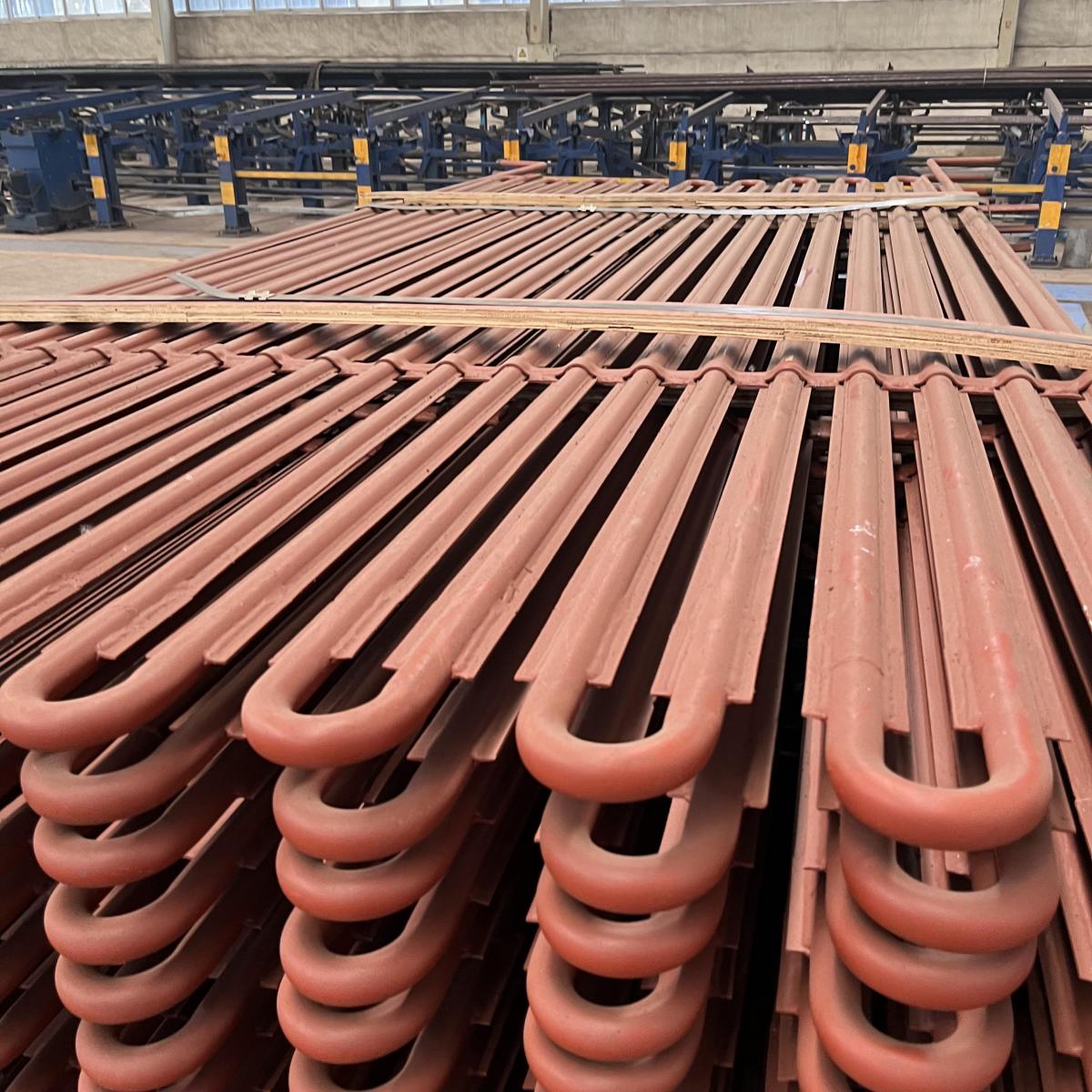
An economizer coil is a heat exchange component widely used in boilers and industrial heating systems. It is designed to recover residual heat from flue gas or exhaust gas and transfer that heat to boiler feedwater or other process fluids. By utilizing waste heat that would otherwise be lost, the economizer coil significantly improves overall thermal efficiency and reduces fuel consumption.
Economizer coils are commonly installed at the downstream section of boilers, where flue gas temperatures are still sufficiently high to enable effective heat recovery.
How an Economizer Coil Works
The working principle of an economizer coil is straightforward:
Hot flue gas flows over the outer surface of the economizer coil
Cooler feedwater flows inside the coil tubes
Heat is transferred from the flue gas to the feedwater
Preheated water enters the boiler, reducing the energy required for steam generation
This process lowers stack temperature, enhances heat utilization, and minimizes thermal losses.
Key Benefits of Using an Economizer Coil
1. Improved Boiler Efficiency
By preheating boiler feedwater, the economizer coil reduces the amount of fuel required to reach operating temperature, directly increasing boiler efficiency.
2. Reduced Fuel Consumption
Lower fuel demand leads to cost savings, especially in large-scale industrial boilers operating continuously.
3. Lower Emissions
Improved combustion efficiency results in reduced CO₂ and NOx emissions, helping facilities meet environmental regulations.
4. Extended Boiler Service Life
Stable operating temperatures and reduced thermal shock help prolong boiler and tube life.
Typical Applications of Economizer Coils
Economizer coils are widely used in various industries, including:
Power plants
CFB and pulverized coal boilers
Waste heat recovery systems
Oil & gas processing facilities
Chemical and petrochemical plants
Cement and steel industries
They are particularly valuable in high-temperature, continuous-operation environments.
Economizer Coil Materials and Design
The material selection for an economizer coil depends on operating temperature, pressure, and flue gas composition. Common materials include:
Carbon steel for standard applications
Low-alloy steel for higher temperature resistance
Stainless steel for corrosive environments
Design considerations typically involve tube diameter, wall thickness, coil arrangement, and soot-blowing accessibility to ensure reliable long-term operation.
Economizer Coil vs. Other Heat Recovery Equipment
Compared with air preheaters or condensers, an economizer coil focuses specifically on feedwater heat recovery, making it one of the most efficient and cost-effective boiler efficiency upgrades. It is often used in combination with other heat recovery devices to maximize overall system performance.
Conclusion
An economizer coil is a critical component for improving energy efficiency in modern boiler systems. By recovering waste heat and reducing fuel consumption, it delivers clear economic and environmental benefits. For industries seeking to optimize boiler performance, reduce operating costs, and comply with emission standards, installing a well-designed economizer coil is a proven and effective solution.
PROFESSIONAL CONSULTATION
If you are interested in our products and want to know more details, please leave a message here, we will reply you as soon as we can.