

Our News
Find out about our latest news here.
Latest News
- ▶ Why Radiography Often Fails on Spiral Plate Heat Exchanger Shells — and How Phased Array UT Solves It
- ▶ EAC Certification for Chinese Pressure Vessels: What It Takes to Export Under TR CU 032/2013
- ▶ Spiral Plate vs Shell and Tube Heat Exchanger: Which One Fits Your Duty?
- ▶ CDQ Waste Heat Boilers: What Governs the Design, and What Actually Breaks
- ▶ What Are the Heating Surfaces in a Waste Heat Boiler? Superheater, Evaporator and Economizer Explained
- ▶ Buying Pressure Vessels from China: How to Read a Q345R and an SA-516 Gr.70 Mill Certificate
Message
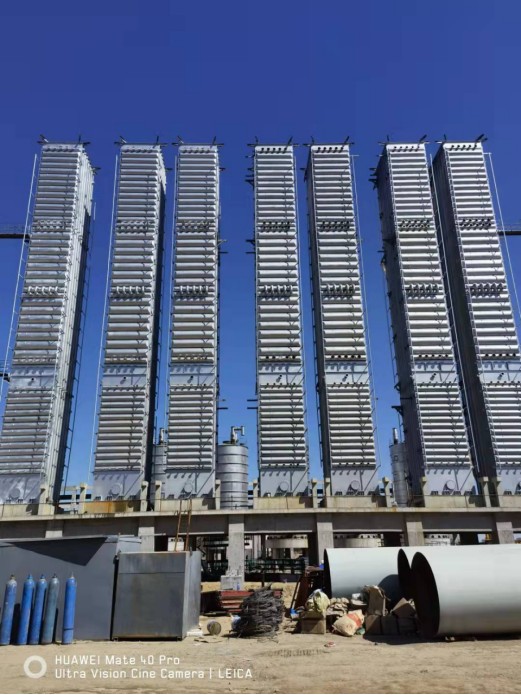
In a coke oven gas treatment system, the Primary Gas Cooler is not always the most eye-catching piece of equipment. Compared with coke ovens, chemical recovery units, desulfurization systems, and environmental protection facilities, the Primary Gas Cooler is often regarded simply as a cooling device.
However, in actual plant operation, the stability, heat transfer performance, and anti-fouling capability of the Primary Gas Cooler can directly affect the operating efficiency of the entire gas treatment system.
Many coking plants face similar challenges: the pressure drop of the cooler gradually increases, the outlet gas temperature becomes unstable, naphthalene, tar, and dust deposits accumulate inside the equipment, cleaning intervals become shorter, and shutdown maintenance becomes more frequent.
On the surface, these may appear to be maintenance problems. In essence, they reflect the combined influence of equipment design, manufacturing quality, spray system arrangement, tube bundle structure, and operating conditions.
A Primary Gas Cooler Is More Than Just a Cooler
After leaving the coke oven, raw coke oven gas is hot and complex in composition. It contains a large amount of water vapor, tar mist, naphthalene, ammonia, sulfides, and dust particles.
The function of the Primary Gas Cooler is not only to reduce the gas temperature, but also to create stable conditions for downstream processes such as tar removal, naphthalene removal, desulfurization, ammonia recovery, and wastewater treatment.
If the cooling performance is insufficient, the outlet gas temperature may remain too high, increasing the load on downstream systems. If the pressure drop becomes excessive, fan energy consumption will increase and system operation will become more difficult. If deposits accumulate heavily in the tube bundle area, heat transfer efficiency will decline, and in serious cases, the system may be forced to shut down for cleaning.
Therefore, the value of a Primary Gas Cooler is not only reflected in the equipment price itself. It is reflected in long-term operating stability, maintenance frequency, energy consumption, and overall system efficiency.
Common Problems in Traditional Primary Gas Coolers
Based on practical project experience, many old or conventional Primary Gas Coolers have several typical problems.
First, the tube bundle arrangement may be unreasonable, resulting in uneven gas flow distribution. In some areas, the gas velocity is too high, causing erosion and localized impact. In other areas, gas flow becomes stagnant, creating dead zones where deposits can easily form.
Second, the spray system may be insufficiently designed. Internal spraying affects not only the cooling effect, but also the removal of tar, naphthalene, and dust. If the spray density, nozzle arrangement, or spray angle is not properly designed, some areas may not be effectively washed, leading to continuous deposit accumulation.
Third, the heat exchange tubes and structural components may not have sufficient corrosion and erosion resistance. Raw coke oven gas is a highly complex medium. The equipment is exposed for long periods to corrosion, fouling, thermal stress, and mechanical erosion. Ordinary designs may struggle to ensure stable long-term operation.
Fourth, maintenance intervals may be short and operating costs may be high. In some plants, the pressure drop rises rapidly after a period of operation, requiring frequent shutdowns for cleaning. This not only increases labor and maintenance costs, but also affects the continuous operation of the coking system.
Optimization Is Not Simply About Increasing Heat Transfer Area
When upgrading a Primary Gas Cooler, many people first think of increasing the heat transfer area. However, a larger heat transfer area does not always mean better performance.
Heat transfer area is only one basic parameter. What truly determines operating performance is the proper matching of heat transfer area, gas velocity, tube bundle structure, spray system, drainage design, and anti-fouling measures.
If the design only pursues a larger heat transfer area while ignoring gas flow distribution and deposit control, the equipment may look attractive in theoretical parameters at the beginning, but still suffer from rising pressure drop, heat transfer decline, and difficult cleaning during long-term operation.
A well-designed Primary Gas Cooler should focus on three key results: stable outlet gas temperature, long-term pressure drop control, and extended cleaning intervals. For coking plants, these three indicators are often more meaningful than theoretical design data alone.
The Spray System Has a Significant Impact on Operation
In the operation of a Primary Gas Cooler, the spray system is often underestimated. In fact, spray water volume, spray density, nozzle type, and nozzle arrangement directly influence the deposition of naphthalene, tar, and dust.
A properly designed spray system can effectively wash the tube surface, reduce the possibility of deposit adhesion, and improve both gas cooling and impurity capture. On the contrary, insufficient spray coverage can easily lead to local fouling, blockage, and pressure drop increase.
Therefore, the upgrading of a Primary Gas Cooler should not focus only on equipment dimensions and heat transfer area. It should also take into account the actual gas composition, operating load, circulating ammonia water conditions, spray water quality, and cleaning practices of the plant.
From “Usable” to “Reliable and Efficient”
In the past, many plants only required a Primary Gas Cooler to be “usable” — capable of cooling gas and maintaining basic operation. Today, with stricter environmental requirements, increasing energy-saving pressure, and higher expectations for continuous production, a Primary Gas Cooler must do more than meet basic functional requirements.
The future direction is high efficiency, low pressure drop, long operating cycles, and convenient maintenance.
A truly reliable Primary Gas Cooler should have stable heat transfer performance, reasonable flow field design, strong anti-fouling capability, reliable manufacturing quality, and a structure that is convenient for inspection and maintenance.
Especially for large-scale coking projects, frequent problems in the Primary Gas Cooler may affect the entire chemical recovery system. The indirect losses caused by unstable operation are often far greater than the initial equipment cost difference.
Conclusion
The Primary Gas Cooler may appear to be only one part of the coke oven gas treatment system, but it connects upstream gas cooling with downstream purification and recovery processes. It is a key piece of equipment affecting system stability.
As coking plants place greater emphasis on energy efficiency, environmental compliance, and long-term stable operation, the design and manufacturing level of Primary Gas Coolers must also continue to improve.
When selecting a Primary Gas Cooler, companies should not compare only the purchase price. More attention should be paid to manufacturing experience, structural design, spray system optimization, operating references, and long-term service capability.
A truly valuable piece of equipment is not only one that meets the drawings at delivery. It is one that continues to operate stably, efficiently, and with low maintenance requirements for years.
This is also the future direction of Primary Gas Cooler development: not merely cooling coke oven gas, but helping the entire coking system operate more stably, more efficiently, and for a longer cycle.
PROFESSIONAL CONSULTATION
If you are interested in our products and want to know more details, please leave a message here, we will reply you as soon as we can.