

Our News
Find out about our latest news here.
Latest News
- ▶ BOYU Adds a New High Frequency Welded Serrated Fin Tube Production Line
- ▶ Why Radiography Often Fails on Spiral Plate Heat Exchanger Shells — and How Phased Array UT Solves It
- ▶ EAC Certification for Chinese Pressure Vessels: What It Takes to Export Under TR CU 032/2013
- ▶ Spiral Plate vs Shell and Tube Heat Exchanger: Which One Fits Your Duty?
- ▶ CDQ Waste Heat Boilers: What Governs the Design, and What Actually Breaks
- ▶ What Are the Heating Surfaces in a Waste Heat Boiler? Superheater, Evaporator and Economizer Explained
Message
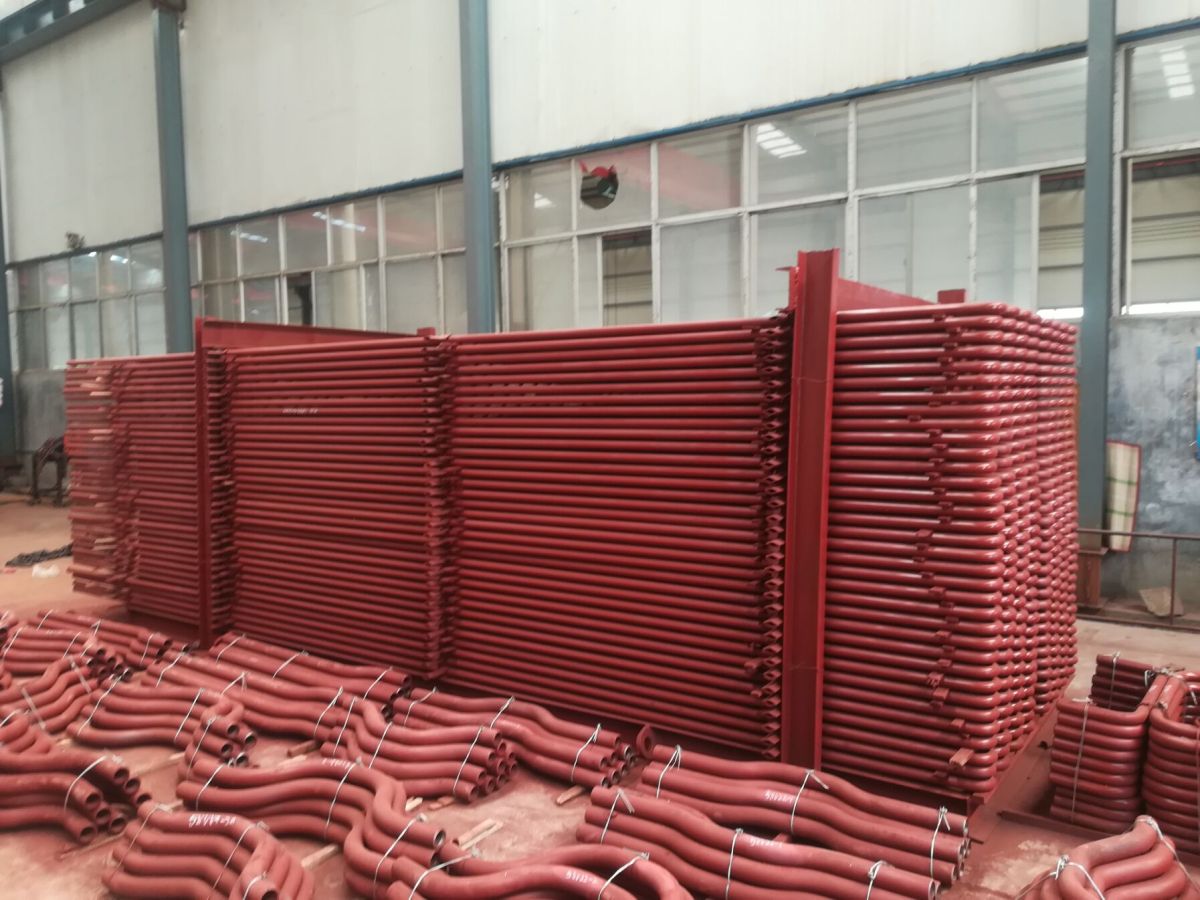
In many industrial plants, economizers gradually lose efficiency over time due to fouling, corrosion, and thermal fatigue. As performance declines, plant operators are faced with a critical question:
Should you retrofit the existing economizer, or replace it entirely?
This decision directly impacts capital investment, downtime, and long-term energy efficiency. Choosing the wrong option can result in unnecessary costs or continued energy losses.
This article provides a practical engineering guide to help you determine when an economizer retrofit is the better option—and when full replacement is unavoidable.
1. When Should You Consider Economizer Retrofit?
An economizer retrofit is typically recommended when the equipment structure remains intact, but performance has deteriorated.
1.1 Declining Heat Transfer Efficiency
Common signs include:
- Rising stack (flue gas) temperature
- Reduced steam generation
- Lower overall heat transfer coefficient
In many industrial applications, a 10–20% drop in efficiency is already enough to justify a retrofit from an economic standpoint.
1.2 Tube Fouling or Blockage
In industries such as coking, metallurgy, and waste heat recovery, flue gas often contains:
- Dust
- Tar
- Fine particulates
These contaminants accumulate on tube surfaces, leading to:
- Increased pressure drop
- Reduced heat transfer efficiency
In most cases, replacing or upgrading the tube bundle can effectively restore performance without replacing the entire unit.
1.3 Corrosion or Material Degradation
Typical corrosion issues include:
- Acid dew point corrosion
- Uniform corrosion or pitting
- High-temperature oxidation
For example, carbon steel tubes may degrade over time and require upgrading to more corrosion-resistant materials such as:
- Stainless steel (304 / 316L)
- 904L for highly corrosive environments
Material upgrade is one of the most common and cost-effective retrofit strategies.
1.4 Frequent Maintenance or Unplanned Shutdowns
If your economizer requires:
- Frequent cleaning or repair
- Increasing maintenance costs
- Repeated shutdowns affecting production
It is a strong indication that retrofit can significantly improve operational stability.
2. When Is Full Replacement Necessary?
While retrofit is often cost-effective, certain conditions require complete replacement.
2.1 Severe Structural Damage
Examples include:
- Shell deformation
- Tube sheet cracking
- Weld failure
These issues compromise mechanical integrity and safety, making retrofit impractical.
2.2 Outdated Design Limitations
If the original design no longer meets process requirements due to:
- Capacity expansion
- Changed operating conditions (temperature, flow rate)
- Insufficient thermal margin
A new design is usually required instead of modifying the old unit.
2.3 End of Service Life
When the economizer has:
- Exhausted its corrosion allowance
- Reached or exceeded its design life
Replacement is generally the safer and more reliable option.
3. Economizer Retrofit vs Replacement: A Practical Comparison
Conclusion:
If the structure is still sound and only performance has declined, economizer retrofit is usually the more cost-effective solution.
4. Common Economizer Retrofit Solutions
Depending on operating conditions, several retrofit strategies can be applied.
4.1 Tube Bundle Replacement
The most common approach includes:
- Replacing aged or fouled tube bundles
- Optimizing tube layout and diameter
- Upgrading materials for better corrosion resistance
4.2 Fin Structure Enhancement
High-efficiency heat transfer elements can significantly improve performance:
- H-type finned tubes
- Spiral finned tubes
These designs increase heat transfer area while reducing fouling tendency.
4.3 Flow Path Optimization
By redesigning internal flow distribution:
- Dead zones can be minimized
- Heat transfer uniformity improved
- Local overheating reduced
4.4 Anti-Corrosion Upgrades
For harsh environments:
- Internal lining
- Protective coatings
- Advanced alloy materials
can extend service life and reduce maintenance frequency.
5. Case Study: Performance Recovery Through Retrofit
A coke oven plant experienced increasing exhaust temperatures and declining efficiency due to fouled economizer tubes.
Instead of replacing the entire unit, a tube bundle retrofit combined with structural optimization was implemented.
Results:
- Exhaust gas temperature reduced by 35°C
- Steam recovery efficiency improved by 18%
- Significant reduction in fuel consumption
This demonstrates how retrofit can deliver near-new performance at a fraction of replacement cost.
6. How to Make the Right Decision
To determine whether retrofit or replacement is the better option, consider the following:
- Is the mechanical structure still reliable?
- Can performance issues be resolved through targeted upgrades?
- Is the retrofit economically justified compared to replacement?
If the answer is “yes” to most of these, retrofit is often the optimal solution.
7. Conclusion
In the context of industrial energy efficiency and decarbonization, economizers play a critical role in waste heat recovery systems.
A well-executed economizer retrofit can:
- Reduce energy losses
- Improve operational stability
- Extend equipment lifespan
- Minimize capital expenditure
For aging systems, a professional technical assessment is essential to identify the most cost-effective path forward.
PROFESSIONAL CONSULTATION
If you are interested in our products and want to know more details, please leave a message here, we will reply you as soon as we can.