


Our News
Find out about our latest news here.
Latest News
- ▶ Buying Pressure Vessels from China: How to Read a Q345R and an SA-516 Gr.70 Mill Certificate
- ▶ Boyu Heavy Industry Adds Power Engineering Construction License to Its ASME-Certified Manufacturing Base
- ▶ Inside the Shop: What Those Chalk Marks on a Vessel Mean
- ▶ Gas Turbine HRSG Heating Surfaces: Design, Materials, Finned Tubes and Manufacturing
- ▶ Waste Heat Boilers Explained: Complete Units vs. Heating Surface Modules
- ▶ Sourcing Large Pressure Vessels from China: What Buyers Should Verify Before Awarding
Message
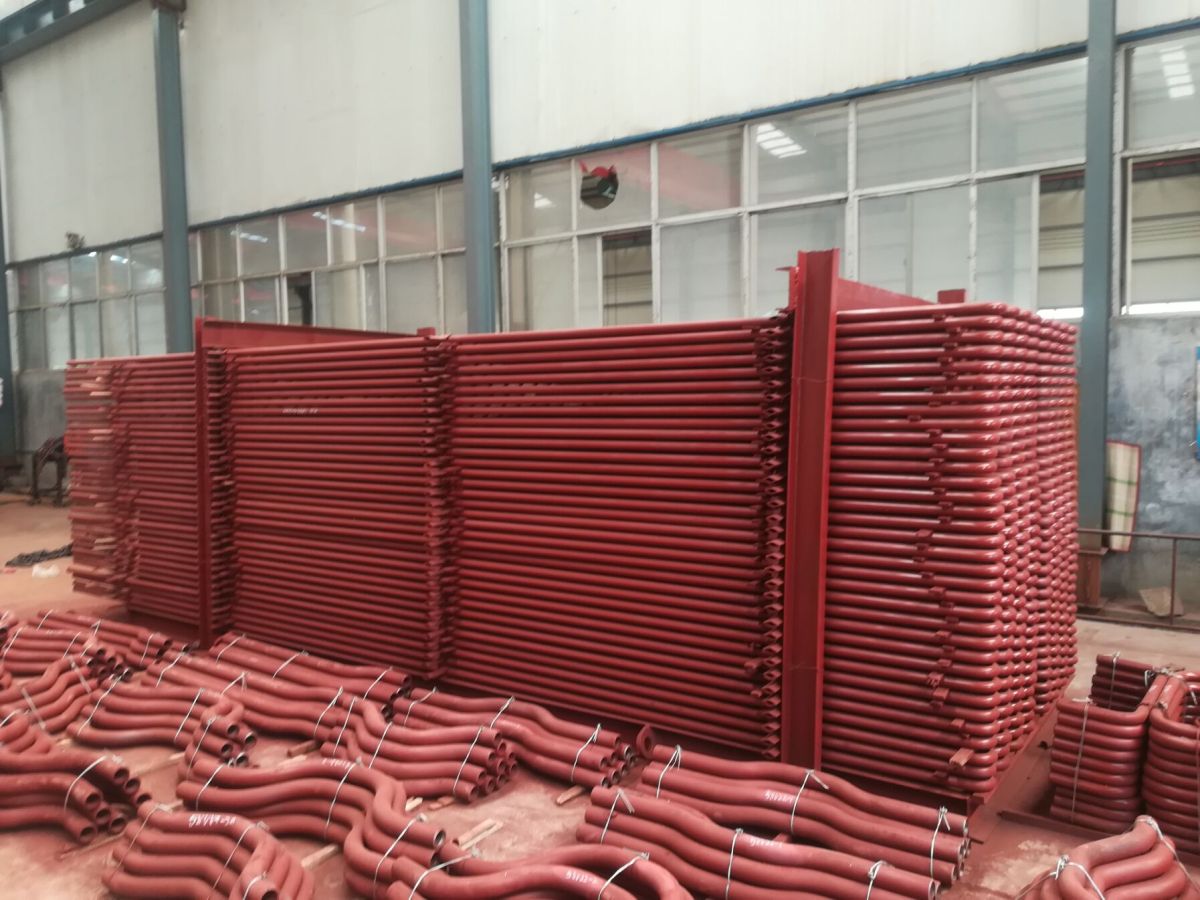
Engineering Logic in Industrial and Power Station Boilers
In medium- and high-pressure industrial boilers and power station boilers, the superheating system is rarely designed as a single heating surface. Instead, it is commonly divided into a Primary Superheater and a Secondary Superheater.
This staged arrangement is not a matter of complexity, but the result of long-term optimization balancing thermal performance, material safety, and operational reliability.
1. Purpose of the Superheating System
Steam generated in the boiler drum is saturated steam, whose temperature is fixed by pressure. If this steam were supplied directly to the steam turbine:
Moisture content would be high
Turbine blade erosion would increase
Thermal efficiency would be reduced
The role of the superheater is therefore to convert saturated steam into dry, stable, and controllable superheated steam.
As steam parameters increase, a single-stage superheater can no longer simultaneously satisfy:
Stable temperature control
Acceptable tube metal temperature
Long-term operating reliability
This is the fundamental reason for dividing the system into primary and secondary superheaters.
2. Primary Superheater
2.1 Functional Role
The primary superheater performs the initial stage of superheating, raising saturated steam to a moderately superheated condition.
Its objective is not to reach the final main steam temperature, but to provide a safe and stable thermal transition.
2.2 Typical Arrangement
Located near the furnace outlet or front section of the convection pass
Exposed to medium-to-high flue gas temperatures
Heat transfer is predominantly convective, with limited radiant influence
2.3 Engineering Significance
Prevents saturated steam from entering the highest-temperature zones directly
Reduces thermal stress and tube metal temperature gradients
Establishes stable inlet conditions for the secondary superheater
In engineering terms, the primary superheater emphasizes:
stability, safety margin, and thermal buffering.
3. Secondary Superheater
3.1 Functional Role
The secondary superheater completes the final stage of superheating, increasing steam temperature to the design main steam temperature with high accuracy.
This heating surface directly defines the steam turbine inlet conditions and has a decisive impact on overall plant efficiency.
3.2 Typical Arrangement
Located in high-temperature furnace zones or rear convection sections
Exposed to the highest flue gas temperatures in the boiler
Subject to large heat flux and rapid load-dependent variations
3.3 Engineering Characteristics
Highest risk of tube over-temperature and creep damage
Strict requirements on material selection, fabrication quality, and temperature control
Usually the most critical component in superheater life assessment
In engineering terms, the secondary superheater emphasizes:
precision, extreme thermal conditions, and life management.
4. Fundamental Differences Between Primary and Secondary Superheaters
5. Why Staged Superheating Is Necessary
In medium- and high-parameter boilers, a single superheater stage often leads to:
Local tube metal overheating
Excessive main steam temperature fluctuations
Poor adaptability to load changes
Insufficient operational safety margins
The essence of staged superheating can be summarized as:
The primary superheater creates thermal distance;
the secondary superheater achieves temperature precision.
This principle has become a standard design philosophy in modern boiler engineering.
6. Engineering Conclusion
The Primary Superheater acts as a thermal buffer and safety stabilizer
The Secondary Superheater defines final steam parameters and efficiency limits
Reliable long-term boiler operation depends on the coordinated design and operation of both stages
In medium- and high-pressure boilers, the durability and performance of the entire superheating system are ultimately determined by how effectively these two superheaters work together.
PROFESSIONAL CONSULTATION
If you are interested in our products and want to know more details, please leave a message here, we will reply you as soon as we can.