


Our News
Find out about our latest news here.
Latest News
- ▶ Buying Pressure Vessels from China: How to Read a Q345R and an SA-516 Gr.70 Mill Certificate
- ▶ Boyu Heavy Industry Adds Power Engineering Construction License to Its ASME-Certified Manufacturing Base
- ▶ Inside the Shop: What Those Chalk Marks on a Vessel Mean
- ▶ Gas Turbine HRSG Heating Surfaces: Design, Materials, Finned Tubes and Manufacturing
- ▶ Waste Heat Boilers Explained: Complete Units vs. Heating Surface Modules
- ▶ Sourcing Large Pressure Vessels from China: What Buyers Should Verify Before Awarding
Message
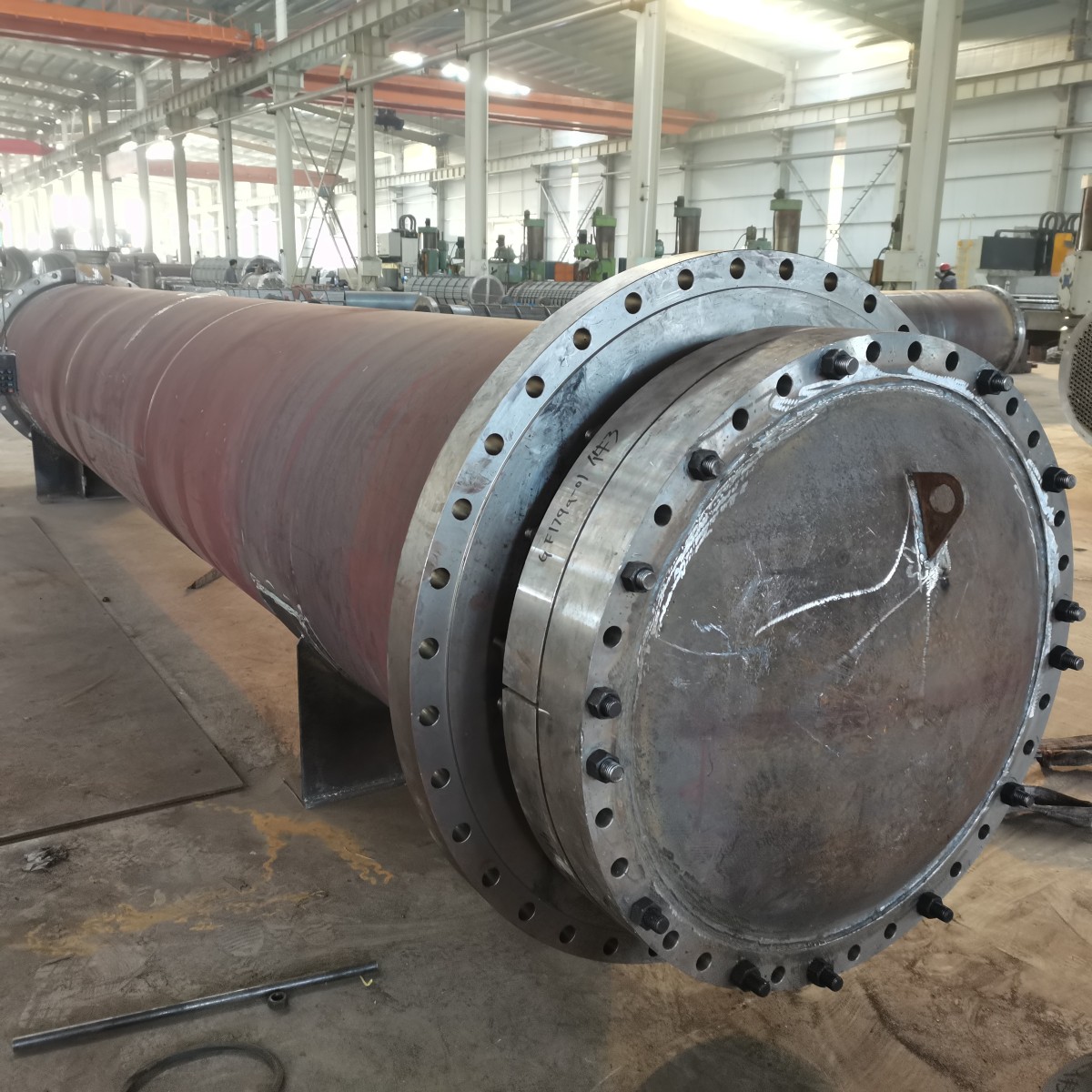
A Detailed Engineering Explanation
1. Overview of Floating Head Heat Exchangers
A floating head heat exchanger is a classical configuration of shell-and-tube heat exchangers, widely used in services involving high operating temperatures, large temperature differentials, severe thermal cycling, or frequent maintenance requirements. Typical applications include petrochemical, coal chemical, coking, metallurgical, power generation, and fine chemical industries.
The defining structural feature of this design is that:
One tube sheet is fixed to the shell, while the other tube sheet is free to move axially, allowing the tube bundle to expand and contract independently from the shell.
This function is entirely realized through the floating head end assembly, which plays a critical role in thermal stress control and long-term operational reliability.
2. Engineering Purpose of the Floating Head End
During operation, the tube-side and shell-side fluids usually operate at different temperatures. As a result, the tube bundle and shell experience unequal thermal expansion. If both ends of the tube bundle were rigidly fixed, excessive thermal stresses would develop, potentially leading to:
Tube-to-tube-sheet joint leakage
Tube rupture or deformation
Permanent damage to tube sheets or shell
The floating head end is designed to:
Absorb axial thermal expansion of the tube bundle
Eliminate or significantly reduce thermal stress
Enable complete removal of the tube bundle for inspection and cleaning
3. Internal Components of the Floating Head End
(From Outside to Inside)
The floating head end is not a single component, but a multi-layer mechanical assembly, each part serving a distinct structural and functional role.
3.1 Floating Head Cover (Channel Cover)
The floating head cover is the outermost pressure-retaining component on the floating end. It is typically fabricated from a solid plate or dished head and is designed to withstand full tube-side design pressure.
Its main functions include:
Sealing the tube-side fluid
Providing mechanical protection for internal components
Allowing removal for maintenance and tube bundle extraction
The floating head cover is bolted to the internal floating head flange, with a gasket installed between the mating surfaces to ensure tight sealing.
3.2 Floating Head Flange (Backing Flange)
Located immediately inside the floating head cover, the floating head flange provides the structural interface between the cover and the floating tube sheet assembly.
Its engineering roles include:
Supporting bolted connections
Distributing bolt preload uniformly
Maintaining gasket compression under pressure and temperature variations
The thickness, bolt size, and bolt quantity are determined based on tube-side pressure, temperature, and applicable design codes such as ASME Section VIII and TEMA standards.
3.3 Floating Tube Sheet
The floating tube sheet is the core component of the floating head end and the most critical element in the entire heat exchanger.
Key characteristics include:
Not rigidly connected to the shell
Free to move axially with the tube bundle
Serving as the anchoring point for all heat exchange tubes
All tubes are expanded and/or welded into the floating tube sheet, forming a complete tube bundle.
To facilitate assembly and maintenance, the floating tube sheet is often designed as a split or segmented structure, especially for large-diameter exchangers.
3.4 Tube Bundle End Assembly
On the inner side of the floating tube sheet lies the tube bundle itself. During operation, the entire tube bundle is allowed to expand or contract axially relative to the shell.
For maintenance purposes, the floating head end can be dismantled, enabling full extraction of the tube bundle from the shell—one of the most significant operational advantages of floating head heat exchangers.
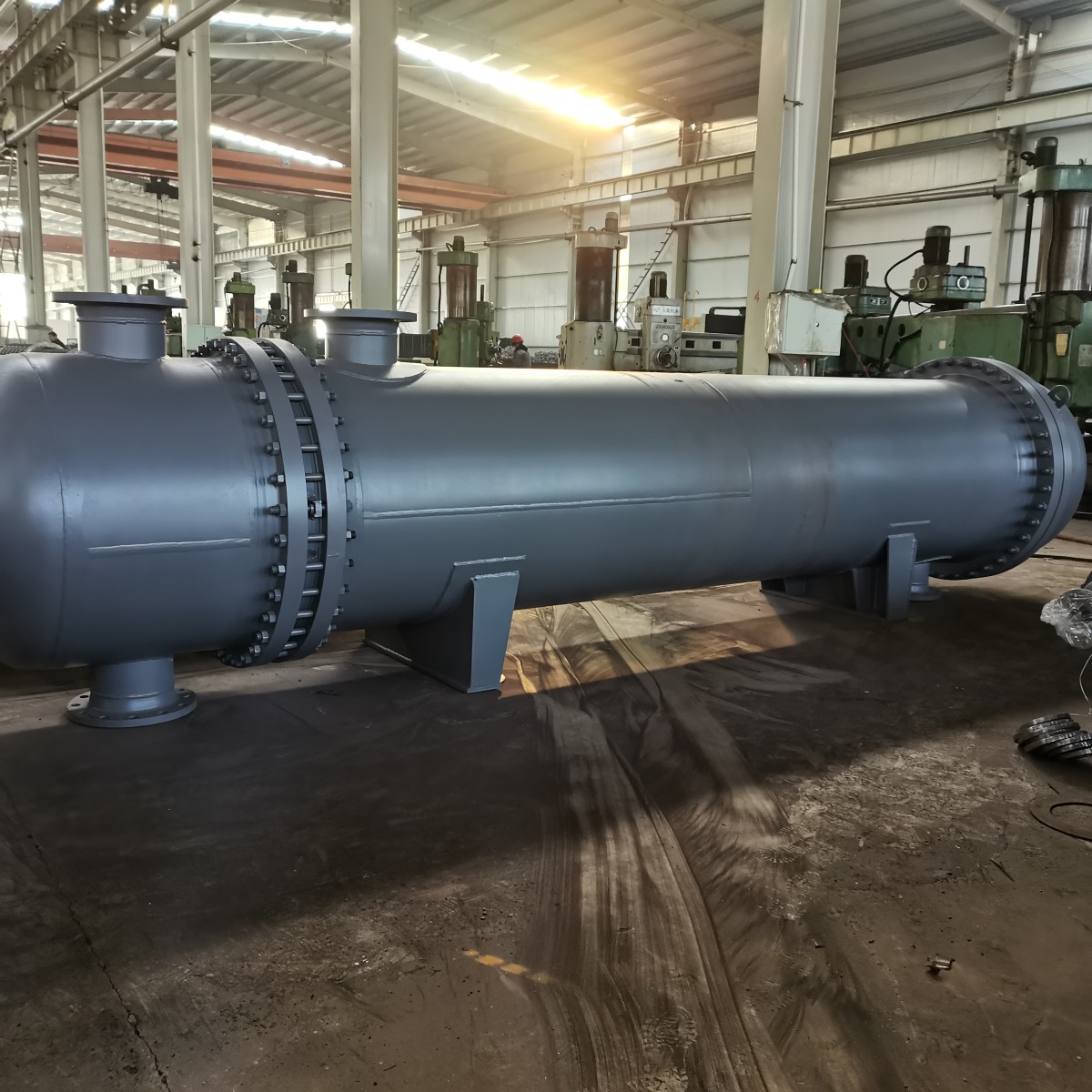
4. How the Floating Head Allows Expansion Without Leakage
From an engineering standpoint, the floating head design solves two seemingly conflicting requirements:
Allowing axial movement of the tube bundle
Ensuring reliable sealing of tube-side fluid
This is achieved through a carefully arranged structural logic:
Axial movement occurs between the floating tube sheet and the shell
All sealing interfaces are static, not sliding
Gaskets are located between the floating head cover and flange, which do not experience relative movement
As a result, the floating head exchanger avoids dynamic seals and maintains high sealing reliability throughout its service life.
5. Typical Applications of Floating Head Heat Exchangers
Floating head designs are generally preferred in services involving:
Large temperature differences between tube-side and shell-side fluids
High operating temperatures
Fouling or scaling media requiring mechanical cleaning
Long-term continuous operation with strict reliability requirements
The trade-off lies in:
More complex mechanical structure
Higher fabrication and assembly cost compared with fixed tube sheet or U-tube designs
Therefore, selection of a floating head exchanger should be based on a comprehensive evaluation of thermal stress, maintenance requirements, safety considerations, and life-cycle cost.
6. Conclusion
The floating head end is far more than a removable end cover. It represents a mature engineering solution integrating thermal stress management, sealing technology, mechanical design, and maintenance practicality.
For high-temperature and high-differential thermal services, the floating head heat exchanger remains one of the most reliable and proven configurations in shell-and-tube heat exchanger design.
PROFESSIONAL CONSULTATION
If you are interested in our products and want to know more details, please leave a message here, we will reply you as soon as we can.