


Our News
Find out about our latest news here.
Latest News
- ▶ Buying Pressure Vessels from China: How to Read a Q345R and an SA-516 Gr.70 Mill Certificate
- ▶ Boyu Heavy Industry Adds Power Engineering Construction License to Its ASME-Certified Manufacturing Base
- ▶ Inside the Shop: What Those Chalk Marks on a Vessel Mean
- ▶ Gas Turbine HRSG Heating Surfaces: Design, Materials, Finned Tubes and Manufacturing
- ▶ Waste Heat Boilers Explained: Complete Units vs. Heating Surface Modules
- ▶ Sourcing Large Pressure Vessels from China: What Buyers Should Verify Before Awarding
Message
1. What Is a Shell and Tube Heat Exchanger?
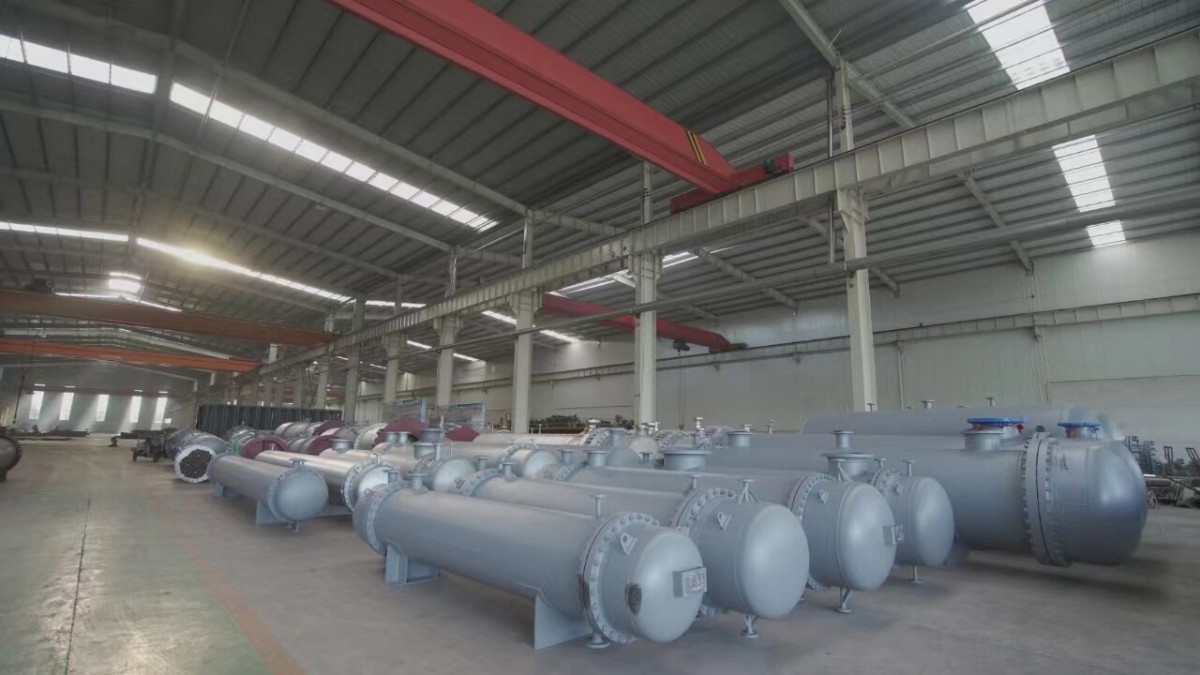
1.1 Basic Working Principle
A shell and tube heat exchanger transfers heat between two fluids—one flowing inside the tubes and the other circulating through the shell. Heat flows through the tube walls, enabling efficient heat exchange even under high temperature or pressure conditions.
1.2 Heat Transfer Between Shell Side and Tube Side
Heat is exchanged through conduction and convection. Engineers adjust flow direction, turbulence, and tube bundle layout to achieve optimal heat transfer performance.
1.3 Why They Are Widely Used
Their high mechanical strength, adaptability, and long service life make them essential equipment in petrochemical plants, power stations, refineries, and chemical industries.
2. Types and Main Components of a Shell and Tube Heat Exchanger
2.1 Common Types
- Fixed Tubesheet
- U-Tube
- Floating Head
2.2 Main Components
- Shell
- Tubes
- Tube Sheets
- Baffles
- Channel / Head
- Nozzles
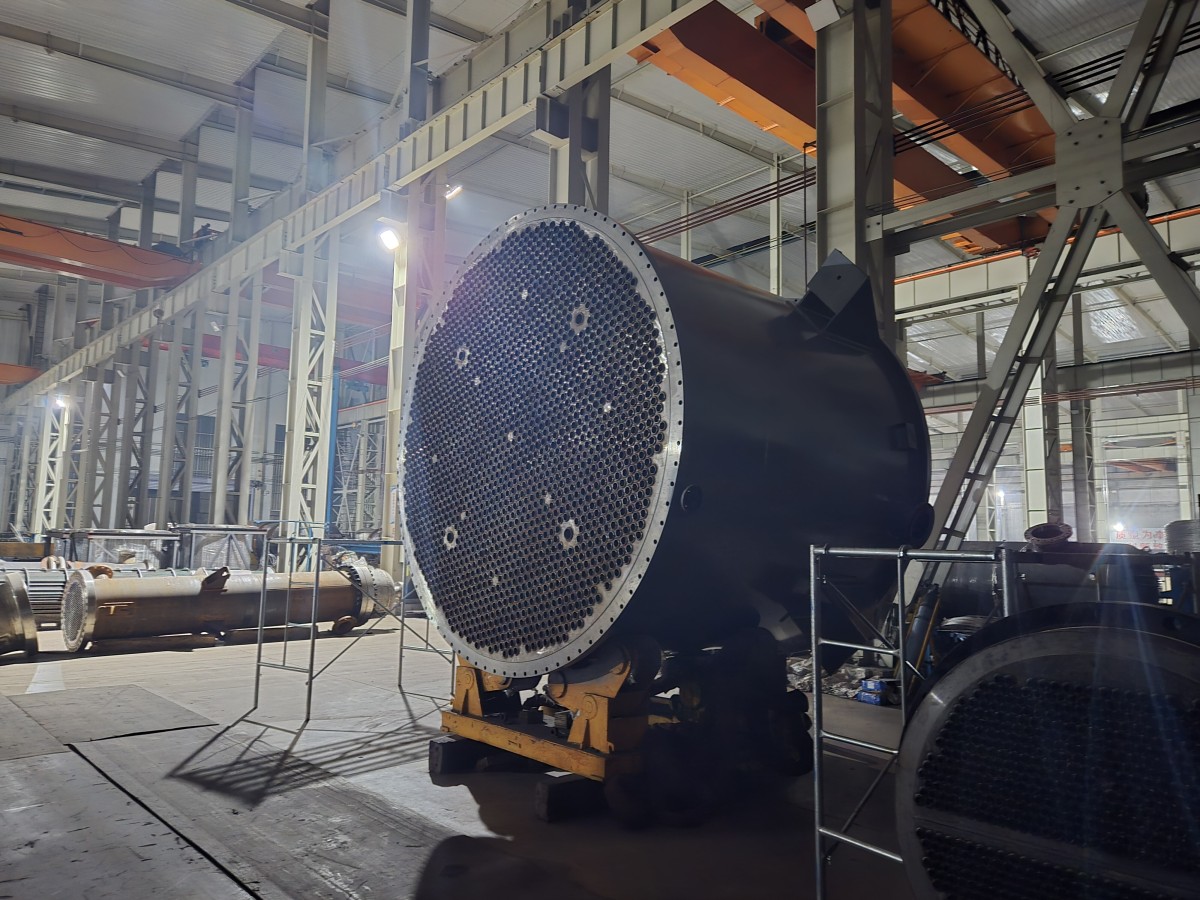
2.3 How Configurations Affect Cost
Floating-head units cost more due to removable bundles. U-tube designs are cheaper but cannot be cleaned mechanically. Fixed tubesheet exchangers are economical but less flexible with thermal expansion.
2.4 Material Options
- Carbon Steel
- Stainless Steel (304/316L/321)
- 904L
- Duplex / Super Duplex
- Inconel / Hastelloy / Monel
- Titanium
3. What Determines the Cost of a Shell and Tube Heat Exchanger?
3.1 Heat Transfer Area
The larger the required heat transfer area, the higher the cost.
3.2 Operating Pressure and Temperature
High design pressure or temperature requires thicker materials and stronger tube sheets.
3.3 Size, Tube Count, and Dimensions
Shell diameter, tube bundle size, and exchanger length all directly impact cost.
3.4 Exchanger Type
Floating head > U-tube > fixed tubesheet in price order.
4. Material Selection and Its Impact on Total Cost
4.1 Carbon Steel vs. Stainless Steel
Carbon steel is economical; stainless steel is more corrosion-resistant but more expensive.
4.2 High-Alloy Options
904L, duplex, and super duplex cost 3–6× more than stainless steel.
4.3 Nickel Alloys
Inconel, Hastelloy, and Monel can be 10–20× more expensive.
4.4 Titanium
Titanium is ideal for seawater service but extremely costly.
4.5 Material Market Fluctuation
Nickel, molybdenum, and titanium prices fluctuate, affecting the overall cost.
5. Design Complexity and Engineering Requirements
5.1 Thermal Design
HTRI calculations ensure correct heat transfer area and performance.
5.2 ASME / TEMA Mechanical Design
Compliance with ASME VIII and TEMA adds engineering cost but ensures reliability.
5.3 Special Design Features
Expansion joints, multi-pass tube layouts, and baffles increase cost.
5.4 High-Pressure & High-Temperature Design
Higher stresses require thicker materials and complex analysis.
6. Manufacturing Processes That Influence Pricing
6.1 Tube-to-Tubesheet Welding
Welding offers better performance but is more costly than tube expansion.
6.2 CNC, Orbital Welding, Automation
Higher automation increases precision and price.
6.3 NDT Requirements
RT, UT, PT, and MT increase inspection cost.
6.4 Production Capacity and Lead Time
Large factories can reduce cost and ensure fast delivery.
7. Additional Cost Factors: Testing, Certification, Logistics
7.1 Hydrostatic and Air Leak Tests
Testing consumes labor and facility resources.
7.2 ASME Certification
ASME-compliant fabrication involves certified welders and authorized inspectors.
7.3 Third-Party Inspection
BV, LR, TUV, SGS inspections add cost but increase reliability.
7.4 Packing and International Shipping
Export packaging, documents, and ocean freight must be included in cost.
8. Typical Price Ranges for Different Heat Exchanger Types
8.1 Small Standard Units
USD 2,000 – 8,000
8.2 Medium Industrial Units
USD 10,000 – 60,000
8.3 Large or High-Alloy Units
USD 80,000 – 300,000+
8.4 Why Prices Vary
Differences in material grade, welding quality, testing scope, and engineering experience.
9. How to Get an Accurate Cost Estimate
9.1 Required Technical Data
- Heat duty
- Flow rates
- Inlet/outlet temperatures
- Design pressure
- Fluid properties
9.2 Importance of P&ID and Datasheets
Clear design inputs result in accurate quotations.
9.3 How to Compare Supplier Quotes
Compare material grade, testing, delivery, and warranty—not only price.
9.4 Common Mistakes in Cost Evaluation
Do not compare different materials or ignore testing and certification costs.
PROFESSIONAL CONSULTATION
If you are interested in our products and want to know more details, please leave a message here, we will reply you as soon as we can.