


Our News
Find out about our latest news here.
Latest News
- ▶ Why Radiography Often Fails on Spiral Plate Heat Exchanger Shells — and How Phased Array UT Solves It
- ▶ EAC Certification for Chinese Pressure Vessels: What It Takes to Export Under TR CU 032/2013
- ▶ Spiral Plate vs Shell and Tube Heat Exchanger: Which One Fits Your Duty?
- ▶ CDQ Waste Heat Boilers: What Governs the Design, and What Actually Breaks
- ▶ What Are the Heating Surfaces in a Waste Heat Boiler? Superheater, Evaporator and Economizer Explained
- ▶ Buying Pressure Vessels from China: How to Read a Q345R and an SA-516 Gr.70 Mill Certificate
Message
Waste Heat Recovery Solution for Rungta Mines Limited
Client: Rungta Mines Limited
Official Website: https://www.therungtagroup.com
Background
Rungta Mines Limited is a well-established industrial group in India, with extensive operations in mining, steelmaking, and metallurgical production. As part of its blast furnace efficiency improvement program, Rungta Mines sought to enhance energy utilization in a 650m³ blast furnace hot blast stove system.
One of the key objectives was to recover high-temperature flue gas waste heat and reuse it to preheat combustion air and fuel gas, thereby reducing fuel consumption and improving overall thermal efficiency.
Engineering Challenges
The project presented several technical and operational challenges:
High flue gas temperatures reaching up to 450°C
Large air and gas flow rates under continuous blast furnace operation
Strict limits on pressure drop to avoid increasing fan power consumption
Long-term reliability requirements in a high-temperature metallurgical environment
Stable performance under variable operating conditions
A well-balanced heat exchanger solution was required to address efficiency, resistance, and durability simultaneously.
Solution Overview
To meet these requirements, a hot blast stove heat exchanger system was implemented, consisting of two independent units:
Air Heat Exchanger – for combustion air preheating
Gas Heat Exchanger – for fuel gas preheating
Both units use high-temperature flue gas as the heat source and adopt a tubular heat exchanger design, which is widely proven in blast furnace and metallurgical applications.
Air Heat Exchanger – Case Highlights
The air heat exchanger plays a critical role in improving combustion efficiency and stabilizing hot blast stove operation.
Operating Features
Designed for flue gas temperatures up to 450°C
Handles air flow rates exceeding 55,000 Nm³/h
Raises ambient air temperature to ≥180°C
Flue gas outlet temperature controlled within 150–180°C
Engineering Benefits
Low pressure loss on both air and flue gas sides
Stable heat transfer performance during continuous operation
Robust tubular structure suitable for high-temperature service
Gas Heat Exchanger – Case Highlights
The gas heat exchanger ensures that fuel gas enters the hot blast stove at a stable and elevated temperature, improving combustion consistency.
Operating Features
Processes fuel gas flow rates above 80,000 Nm³/h
Increases gas temperature from approximately 60°C to ≥180°C
Operates under the same high-temperature flue gas conditions
Designed for low system resistance
Engineering Benefits
Improved ignition reliability and flame stability
Reduced thermal fluctuations in the hot blast stove
More efficient fuel utilization under varying load conditions
Materials and Structural Design
Heat Transfer Tubes
Manufactured from carbon steel suitable for high-temperature applications
Tube wall thickness designed in accordance with national standards to ensure strength and durability
Structural Components
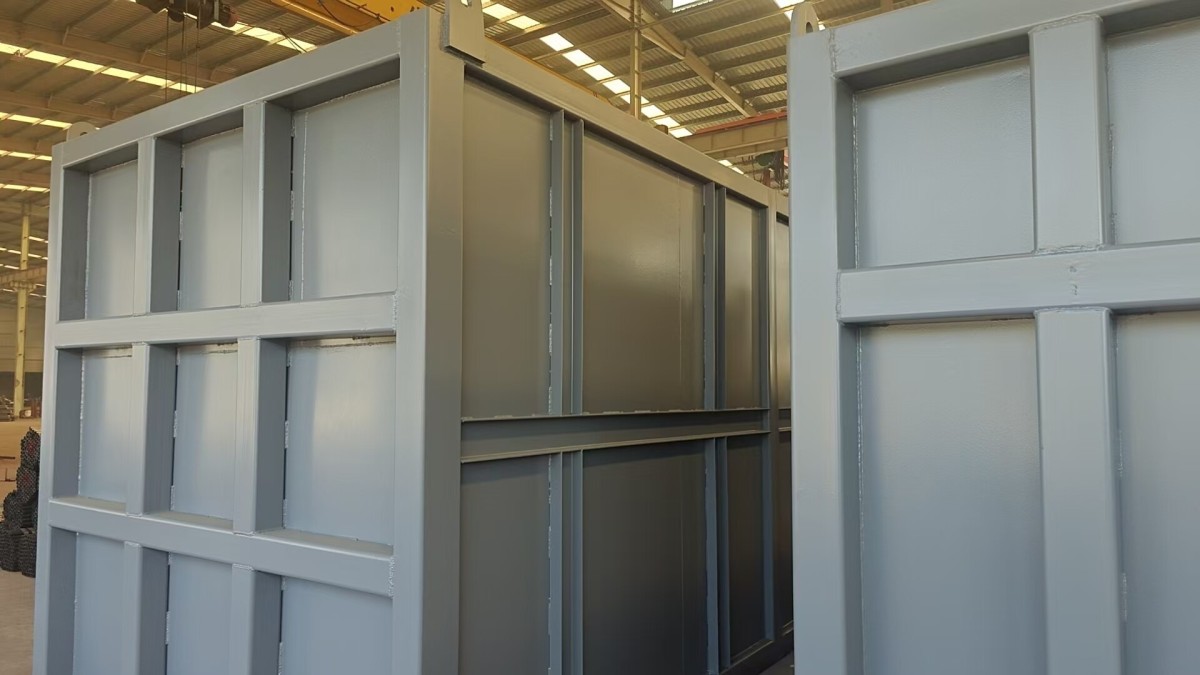
Support frame fabricated from Q235B carbon steel
Designed for mechanical stability in long-term industrial operation
Thermal Insulation
Internal insulation system with liner plates and insulation wool
Effectively minimizes heat loss
Controls external surface temperature to enhance operational safety
Performance Results
After commissioning, the hot blast stove heat exchanger system delivered the following results:
Effective recovery of high-temperature flue gas waste heat
Stable preheating of both combustion air and fuel gas
Improved thermal efficiency of the hot blast stove
Reduced overall fuel consumption
Reliable, continuous performance under blast furnace operating conditions
Conclusion
This case study demonstrates how a properly engineered hot blast stove heat exchanger system can significantly enhance energy efficiency in blast furnace operations. By combining a proven tubular design, suitable material selection, and optimized thermal parameters, the system achieves a balance between efficiency, reliability, and low operating resistance.
For metallurgical plants seeking blast furnace waste heat recovery, fuel efficiency improvement, and long-term operational stability, this solution provides a practical and proven reference.
PROFESSIONAL CONSULTATION
If you are interested in our products and want to know more details, please leave a message here, we will reply you as soon as we can.