

Our News
Find out about our latest news here.
Latest News
- ▶ Why Radiography Often Fails on Spiral Plate Heat Exchanger Shells — and How Phased Array UT Solves It
- ▶ EAC Certification for Chinese Pressure Vessels: What It Takes to Export Under TR CU 032/2013
- ▶ Spiral Plate vs Shell and Tube Heat Exchanger: Which One Fits Your Duty?
- ▶ CDQ Waste Heat Boilers: What Governs the Design, and What Actually Breaks
- ▶ What Are the Heating Surfaces in a Waste Heat Boiler? Superheater, Evaporator and Economizer Explained
- ▶ Buying Pressure Vessels from China: How to Read a Q345R and an SA-516 Gr.70 Mill Certificate
Message
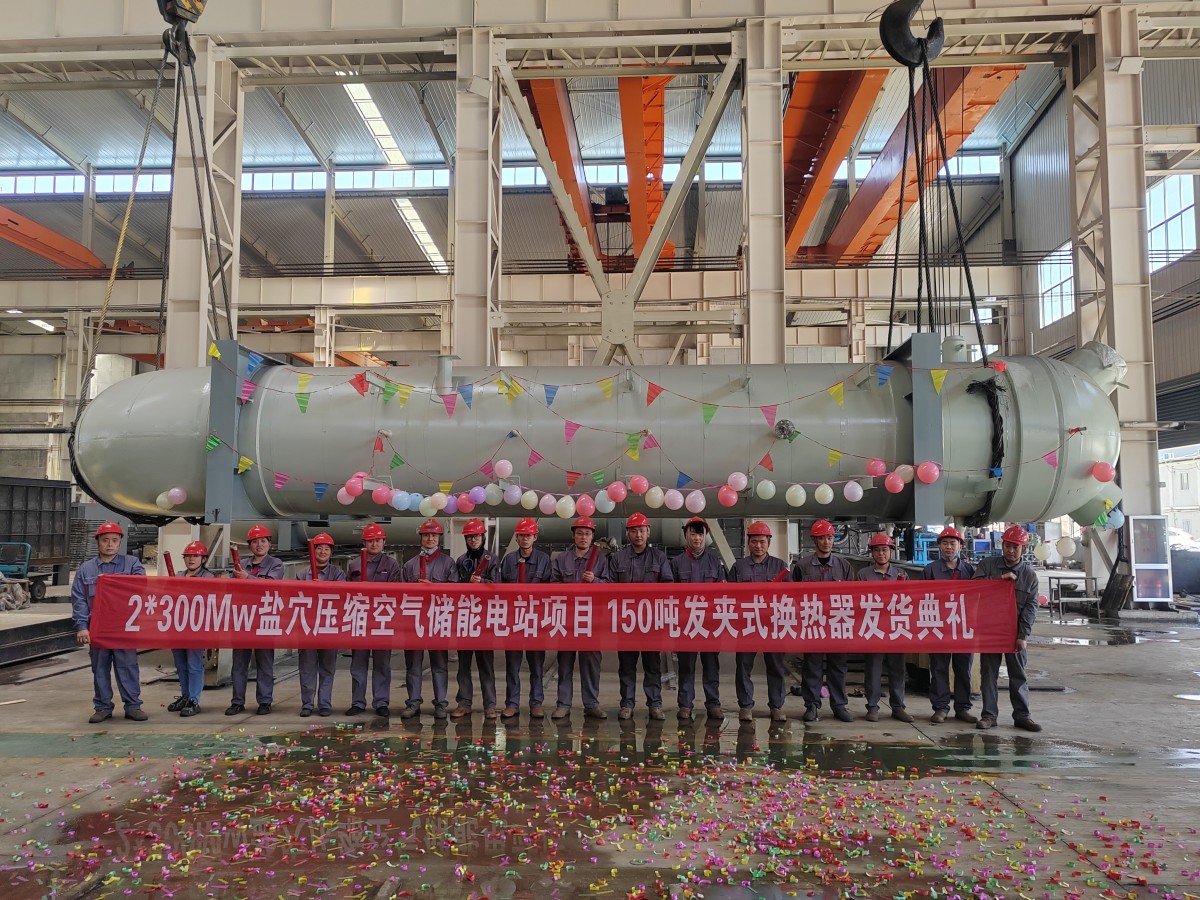
A hairpin heat exchanger—also known as a double pipe hairpin exchanger—is a compact heat transfer unit formed by bending a double-pipe bundle into a “U” (hairpin) shape. It is widely applied in oil & gas, petrochemical, chemical, and industrial utility services where robust construction, high pressure capability, and modular expandability are required.
1. What Is a Hairpin Heat Exchanger?
A hairpin heat exchanger is a type of double pipe heat exchanger where an inner tube is inserted into an outer pipe, and the assembly is bent into a U-shape. One fluid flows through the inner tube, while the other flows through theannulus between the inner tube and the outer pipe. Multiple hairpins can be connected in series or parallel to achieve the required heat duty.
Compared with shell-and-tube exchangers, hairpin exchangers are typically used for smaller to medium duties but are highly valued for high-pressure service, compact layout, and modular expansion.
2. Working Principle
Heat transfer occurs through the tube wall separating the two streams:
- Fluid A flows through the inner tube (tube side).
- Fluid B flows through the annulus (shell/annulus side).
- Heat is exchanged across the inner tube wall by conduction and convection.
2.1 Counter-Current vs. Co-Current Flow
Hairpin exchangers commonly use counter-current flow to maximize the temperature driving force (LMTD) and improve overall thermal performance. Co-current flow may be used in specific cases to manage temperature approach or thermal stress.
3. Typical Configurations and Flow Arrangements
3.1 Single Hairpin (One U-Bend Section)
A basic unit providing moderate duty with compact installation. Suitable for simple heating/cooling tasks or as a pilot-scale exchanger.
3.2 Multi-Hairpin Assembly (Modular Bank)
Multiple hairpins are manifolded together to increase heat transfer area. This approach is common when future capacity expansion is expected.
3.3 Multi-Pass Designs
To adjust velocity and improve heat transfer coefficients, hairpin exchangers can be configured with multiple passes on the tube side and/or annulus side. Pass partitions and return bends are used to route flow.
3.4 Enhanced Tubes / Finned Options (If Applicable)
Depending on service, enhanced tubes (internally or externally) or finned sections may be applied to increase heat transfer area, particularly for gas cooling/heating duties where film coefficients are low.
4. Key Advantages
- High pressure capability: Double-pipe construction can be well-suited for high design pressures and severe mechanical requirements.
- Compact and modular: Easy to add or remove hairpin sections to match duty changes and project constraints.
- Good temperature approach: Counter-current arrangement supports close approach temperatures in many services.
- Flexible materials: Inner tube and outer pipe materials can be selected to match corrosion and temperature requirements.
- Ease of maintenance (service dependent): Certain designs allow cleaning access and bundle servicing without large shell removal.
5. Typical Applications
- Oil & gas and petrochemical: lube oil coolers, seal oil coolers, amine/glycol service, small process heaters/coolers.
- High-pressure process streams: where compact piping-style construction is preferred over large shells.
- Utilities: water/oil heat exchange, thermal fluid duties, small steam condensers (service-dependent).
- Skid packages: compressor packages, pump skids, metering skids, dehydration skids, and modular process skids.
6. Design and Selection Considerations
6.1 Thermal Design Inputs
- Heat duty, inlet/outlet temperatures, allowable pressure drop (both sides)
- Flow rates, fluid properties (viscosity, Cp, thermal conductivity), fouling factors
- Phase change duties (condensation/evaporation), if applicable
6.2 Hydraulic Considerations
Hairpin exchangers are sensitive to velocity selection in both the inner tube and annulus. Proper velocity is needed to balance:
- Heat transfer coefficient
- Pressure drop limitations
- Erosion risk (for abrasive or high-velocity services)
- Fouling tendency (low velocities often increase fouling risk)
6.3 Fouling and Cleanability
If fouling is expected (e.g., heavy hydrocarbons, dirty water, particulate-laden streams), the design should incorporate:
- Appropriate fouling margins and conservative pressure drop allowances
- Accessible connections, drains, vents, and cleaning strategy
- Material selection and surface finish considerations
6.4 Mechanical Layout and Installation Constraints
- Plot space, lifting and maintenance clearance, skid integration requirements
- Nozzle orientation, piping stress interface, and support design
- Thermal expansion allowance and flexibility (especially for large temperature differences)
7. Materials, Corrosion, and Mechanical Design Notes
Material selection depends on process chemistry, temperature, and corrosion philosophy. Common selections include carbon steel, stainless steels, duplex grades, and nickel alloys for severe environments. In corrosive duties, it is common to optimize cost by selecting corrosion-resistant materials for the inner tube while using different materials for outer components, subject to code and welding compatibility.
- Corrosion allowance: applied based on service severity and client standards.
- Gaskets and sealing: selected to match temperature, pressure, and chemical compatibility.
- Design codes: typically aligned with project requirements (pressure design, inspection, and testing requirements).
8. Inspection, Testing, and Quality Control
Typical QA/QC scope may include:
- Material traceability and PMI (where required)
- Welding qualification (WPS/PQR) and welder qualification
- NDT (PT/MT/UT/RT) per code and project specification
- Hydrostatic testing (tube side and/or annulus side as required)
- Dimensional inspection and nozzle orientation checks
- Documentation: MDR, test reports, and final inspection records
9. Operation and Maintenance Recommendations
- Start-up/shutdown control: manage ramp rates where thermal shock could be a concern.
- Monitor pressure drop: increasing ΔP often signals fouling or flow maldistribution.
- Leak detection: define procedures for isolating and testing in case of cross-contamination risk.
- Cleaning strategy: plan for chemical cleaning or mechanical cleaning based on service conditions.
- Spare parts planning: gaskets, seals, and critical fittings should be included in maintenance planning.
10. RFQ / Datasheet Checklist
To support accurate quotation and fit-for-purpose design, provide:
- Service description and duty: heat load, inlet/outlet temperatures, flow rates
- Fluid properties and composition, including fouling and solids content
- Design and operating pressure/temperature for both sides
- Allowable pressure drop and required thermal performance margins
- Materials of construction requirements and corrosion allowance
- Applicable codes/standards and inspection/testing scope
- Connection standards (flange rating, nozzle sizes, piping spec) and layout constraints
- Installation type: skid-mounted or standalone; access and maintenance requirements
11. Conclusion
A hairpin heat exchanger (double pipe hairpin exchanger) provides a robust, high-pressure-capable, and modular solution for heating and cooling duties across oil & gas, petrochemical, and industrial applications. With appropriate thermal sizing, pressure-drop management, and materials selection, hairpin exchangers deliver reliable performance and can be readily integrated into skid packages and modular plant designs.
PROFESSIONAL CONSULTATION
If you are interested in our products and want to know more details, please leave a message here, we will reply you as soon as we can.