

Our News
Find out about our latest news here.
Latest News
- ▶ BOYU Adds a New High Frequency Welded Serrated Fin Tube Production Line
- ▶ Why Radiography Often Fails on Spiral Plate Heat Exchanger Shells — and How Phased Array UT Solves It
- ▶ EAC Certification for Chinese Pressure Vessels: What It Takes to Export Under TR CU 032/2013
- ▶ Spiral Plate vs Shell and Tube Heat Exchanger: Which One Fits Your Duty?
- ▶ CDQ Waste Heat Boilers: What Governs the Design, and What Actually Breaks
- ▶ What Are the Heating Surfaces in a Waste Heat Boiler? Superheater, Evaporator and Economizer Explained
Message
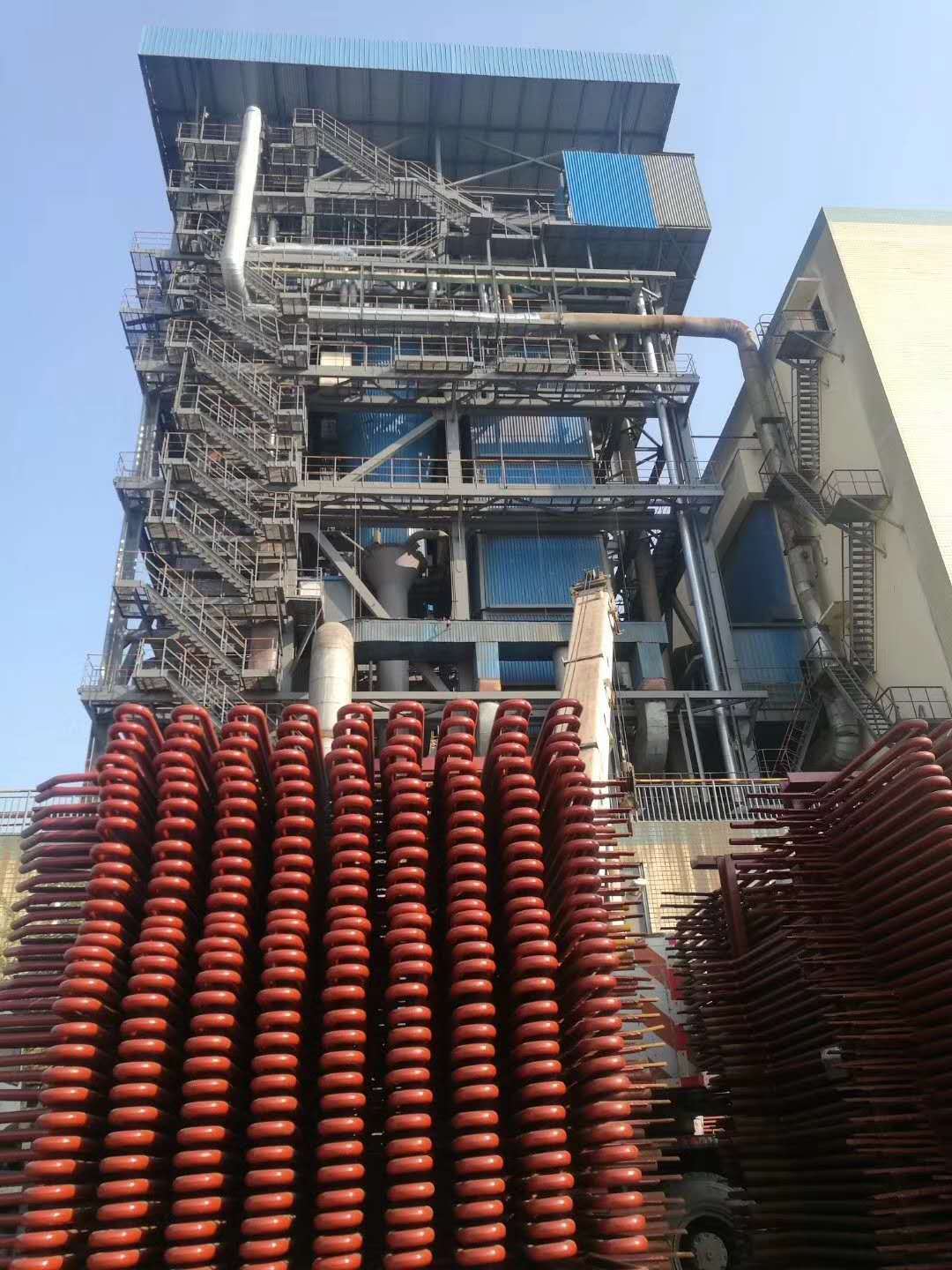
In modern industrial boilers and power plant boilers, the economizer is one of the most critical heat-recovery components. Its primary function is to recover residual heat from flue gas and use it to preheat boiler feedwater, thereby reducing fuel consumption, improving thermal efficiency, and enhancing overall boiler performance.
This article explains the working principle of the economizer and highlights its essential role within the boiler system.
1. Working Principle of a Boiler Economizer
An economizer is typically installed in the rear flue gas duct of the boiler, downstream of superheaters or reheaters and upstream of the air preheater, or coordinated with it. Although flue gas temperature decreases after passing through the main heating surfaces, it still contains a significant amount of recoverable sensible heat.
Through indirect heat exchange between flue gas and feedwater, the economizer transfers this waste heat to the water flowing inside the tubes:
Flue gas side: Temperature decreases, reducing exhaust heat loss
Feedwater side: Temperature increases before entering the drum or water walls
No phase change occurs in the economizer, but its contribution to the boiler heat balance is substantial.
2. Key Functions of the Economizer in a Boiler System
2.1 Reducing Fuel Consumption and Operating Costs
By increasing feedwater temperature, the boiler requires less fuel to generate the same amount of steam. In general:
Every 10–20°C increase in feedwater temperature
Can improve boiler efficiency by approximately 0.5%–1.5%
For continuously operating industrial and utility boilers, this translates directly into significant fuel savings.
2.2 Improving Overall Boiler Thermal Efficiency
The economizer lowers flue gas exit temperature and recovers energy that would otherwise be lost to the atmosphere. As a result, more heat is effectively utilized within the boiler system, making the economizer an indispensable heat-transfer surface in high-efficiency boiler design.
2.3 Reducing Thermal Stress and Enhancing Operational Safety
Preheated feedwater entering the drum or water walls helps to:
Minimize temperature differences between metal surfaces and water
Reduce thermal shock and stress
Extend the service life of pressure parts
This is especially important for high-pressure and high-capacity boilers.
2.4 Supporting Energy Saving and Environmental Compliance
Lower exhaust gas temperature means reduced heat loss and lower fuel consumption per unit of steam generation. Consequently, emissions associated with fuel combustion—such as CO₂—are reduced, helping boiler systems meet increasingly stringent energy-efficiency and environmental requirements.
3. Application Value of Economizers in Different Boiler Types
Industrial boilers: Lower fuel cost and improved economic performance
Power plant boilers: Reduced heat rate and improved overall unit efficiency
CFB boilers and waste heat boilers: Enhanced tail-end heat recovery and system energy utilization
Depending on fuel type, flue gas composition, and operating conditions, economizers can be designed using bare tubes, spiral finned tubes, H-type finned tubes, or low-temperature economizer configurations to suit high-dust, high-sulfur, or low-temperature corrosion environments.
4. Conclusion: A Key Component of Boiler Energy Efficiency
From a thermal system perspective, the economizer is not merely an auxiliary component but a critical link connecting fuel efficiency, operational safety, environmental performance, and economic benefit. By converting flue gas waste heat into useful energy, it plays a decisive role in enabling boilers to operate efficiently, reliably, and sustainably.
As boiler technology continues to evolve toward higher efficiency and stricter environmental standards, the design quality, manufacturing reliability, and operational stability of economizers will remain fundamental to achieving optimal boiler performance.
PROFESSIONAL CONSULTATION
If you are interested in our products and want to know more details, please leave a message here, we will reply you as soon as we can.