

Our News
Find out about our latest news here.
Latest News
- ▶ Why Radiography Often Fails on Spiral Plate Heat Exchanger Shells — and How Phased Array UT Solves It
- ▶ EAC Certification for Chinese Pressure Vessels: What It Takes to Export Under TR CU 032/2013
- ▶ Spiral Plate vs Shell and Tube Heat Exchanger: Which One Fits Your Duty?
- ▶ CDQ Waste Heat Boilers: What Governs the Design, and What Actually Breaks
- ▶ What Are the Heating Surfaces in a Waste Heat Boiler? Superheater, Evaporator and Economizer Explained
- ▶ Buying Pressure Vessels from China: How to Read a Q345R and an SA-516 Gr.70 Mill Certificate
Message
1. What Is a Sinter Ring Cooler?
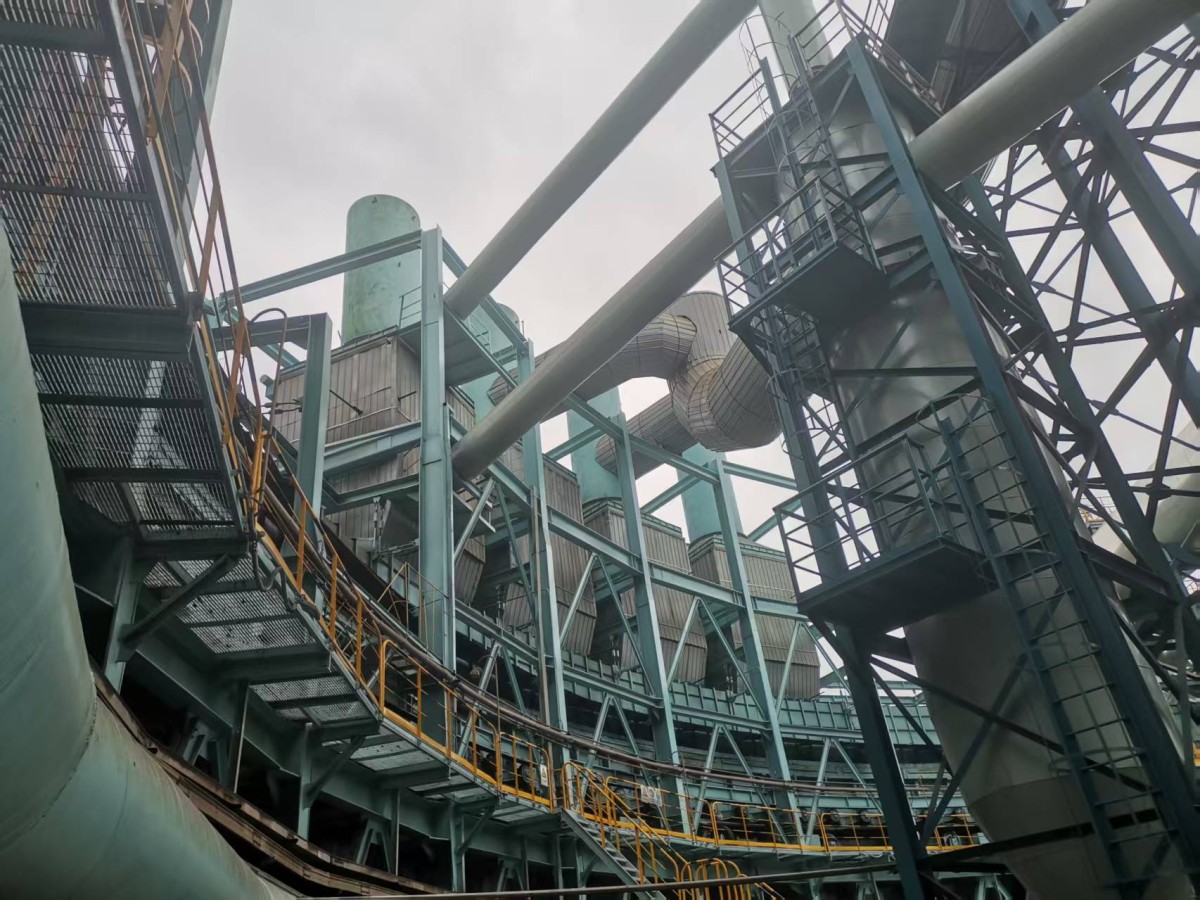
A sinter ring cooler, also known as a circular cooler for sinter, is a key piece of equipment in the iron ore sintering process. It is used to cool hot sinter discharged from the sintering machine before downstream handling, screening, and transportation.
In a typical sinter plant, hot sinter at temperatures of approximately 600–800°C is transferred to the ring cooler, where ambient air is drawn through the sinter bed to reduce its temperature to a level suitable for further processing or charging into the blast furnace system.
Because of its annular structure and continuous operation, the sinter ring cooler is widely adopted in medium and large-scale steel plants.
2. Working Principle of a Sinter Ring Cooler
The sinter ring cooler operates on a forced air cooling principle:
Hot sinter is evenly distributed onto the annular cooler bed.
Cooling air is drawn upward (or downward, depending on design) through the sinter layer.
Heat is transferred from the hot sinter to the cooling air.
Cooled sinter is discharged continuously, while hot exhaust gas is collected through hoods and ducting.
This process ensures:
Stable cooling performance
Continuous material flow
High operational reliability
The circular layout allows uniform residence time and effective temperature control across the entire cooling zone.
3. Role of the Sinter Ring Cooler in the Sintering Process
Within the overall iron ore sintering system, the ring cooler serves several critical functions:
Thermal conditioning of sinter prior to screening
Mechanical stabilization, reducing breakage during handling
Preparation for blast furnace charging
Heat source for waste heat recovery systems
Without adequate cooling, hot sinter can damage conveying equipment and negatively affect downstream processes.
4. Exhaust Gas Characteristics of a Sinter Ring Cooler
From an environmental and energy perspective, sinter ring cooler exhaust gas is of particular importance.
Typical characteristics include:
Medium-temperature flue gas
Large volumetric flow rate
Presence of dust and fine particulates
Trace VOCs and odorous compounds (depending on raw materials)
Because of these features, ring cooler off-gas is often treated as:
A waste heat recovery opportunity
A key emission source in sinter plants requiring gas treatment systems
5. Waste Heat Recovery from Sinter Ring Coolers
Modern sinter plants increasingly integrate waste heat recovery systems with sinter ring coolers.
Recovered heat can be used for:
Steam generation
Hot water production
Preheating combustion air or process gas
Supporting downstream environmental treatment units
Efficient utilization of sinter cooler waste heat contributes significantly to:
Energy efficiency improvement
Carbon emission reduction
Overall plant operating cost reduction
6. Environmental Control and Emission Treatment
Due to tightening environmental regulations, waste gas from sinter ring coolers is commonly routed to dedicated treatment systems, such as:
Dust removal units
VOC treatment systems
Thermal oxidation or catalytic processes
Integrated exhaust gas management solutions
Proper design of the sinter ring cooler exhaust gas collection system is essential for ensuring compliance with environmental standards while maintaining stable plant operation.
7. Conclusion
The sinter ring cooler is an indispensable component of the iron ore sintering process. Beyond its primary cooling function, it plays a vital role in energy recovery and environmental management within modern steel plants.
With increasing emphasis on energy efficiency and emission control, sinter ring coolers are no longer just cooling devices, but also important nodes in integrated waste heat and exhaust gas treatment systems.
PROFESSIONAL CONSULTATION
If you are interested in our products and want to know more details, please leave a message here, we will reply you as soon as we can.