

Our News
Find out about our latest news here.
Latest News
- ▶ Why Radiography Often Fails on Spiral Plate Heat Exchanger Shells — and How Phased Array UT Solves It
- ▶ EAC Certification for Chinese Pressure Vessels: What It Takes to Export Under TR CU 032/2013
- ▶ Spiral Plate vs Shell and Tube Heat Exchanger: Which One Fits Your Duty?
- ▶ CDQ Waste Heat Boilers: What Governs the Design, and What Actually Breaks
- ▶ What Are the Heating Surfaces in a Waste Heat Boiler? Superheater, Evaporator and Economizer Explained
- ▶ Buying Pressure Vessels from China: How to Read a Q345R and an SA-516 Gr.70 Mill Certificate
Message
Contents
- 1. Functions of the Low-Low Temperature Economizer
- 2. Energy Saving and Heat Recovery
- 3. Improvement of ESP Performance
- 4. Synergistic Removal of SO₃
- 5. Additional Operational Benefits
- 6. Gravity Heat Pipe Low-Low Temperature Economizer
- 7. Key Technical Concepts
- 8. Structure and Advantages of Gravity Heat Pipe LLTE
- 9. Application Case
- 10. Required Design Parameters
1. Functions of the Low-Low Temperature Economizer
A Low-Low Temperature Economizer (LLTE), also known as a flue gas cooler, is installed upstream of the dry electrostatic precipitator (ESP) in the boiler tail flue gas system of coal-fired power plants. It recovers waste heat from flue gas to preheat boiler feedwater.
By reducing the flue gas temperature from the conventional 120–150 °C range to 85–95 °C (below the acid dew point but above the water dew point), the LLTE provides significant energy-saving and environmental benefits.
2. Energy Saving and Heat Recovery
The LLTE transfers sensible heat from flue gas to boiler feedwater, increasing feedwater temperature and improving overall boiler thermal efficiency. Application of an LLTE can reduce standard coal consumption by approximately 1.5–2.0 g/kWh.
3. Improvement of ESP Performance
ESP efficiency is highly dependent on fly ash specific resistivity. At traditional flue gas temperatures (120–150 °C), fly ash often exhibits high resistivity (>1011 Ω·cm), which leads to back corona effects and poor dust collection.
When flue gas temperature is reduced to approximately 90 °C, fly ash resistivity decreases by 1–2 orders of magnitude, returning to the optimal range of 104–1010 Ω·cm. This significantly enhances ESP collection efficiency, allowing particulate emissions of ≤20 mg/Nm³ and, under favorable conditions, ≤10 mg/Nm³.
4. Synergistic Removal of SO₃
SO₃ in flue gas has an acid dew point typically between 110–150 °C. When the flue gas is cooled to around 90 °C, SO₃ condenses into sulfuric acid mist, which readily adsorbs onto fly ash particles.
These acid-laden particles are more easily captured by the ESP, achieving SO₃ removal efficiencies of 80–95%. This also mitigates low-temperature corrosion and eliminates visible blue or yellow plume phenomena.
5. Additional Operational Benefits
- Reduced flue gas volume (approximately 20% contraction)
- Lower load on ESPs, ID fans, and FGD systems
- Higher allowable operating voltage for ESPs
- Improved overall system reliability
6. Gravity Heat Pipe Low-Low Temperature Economizer
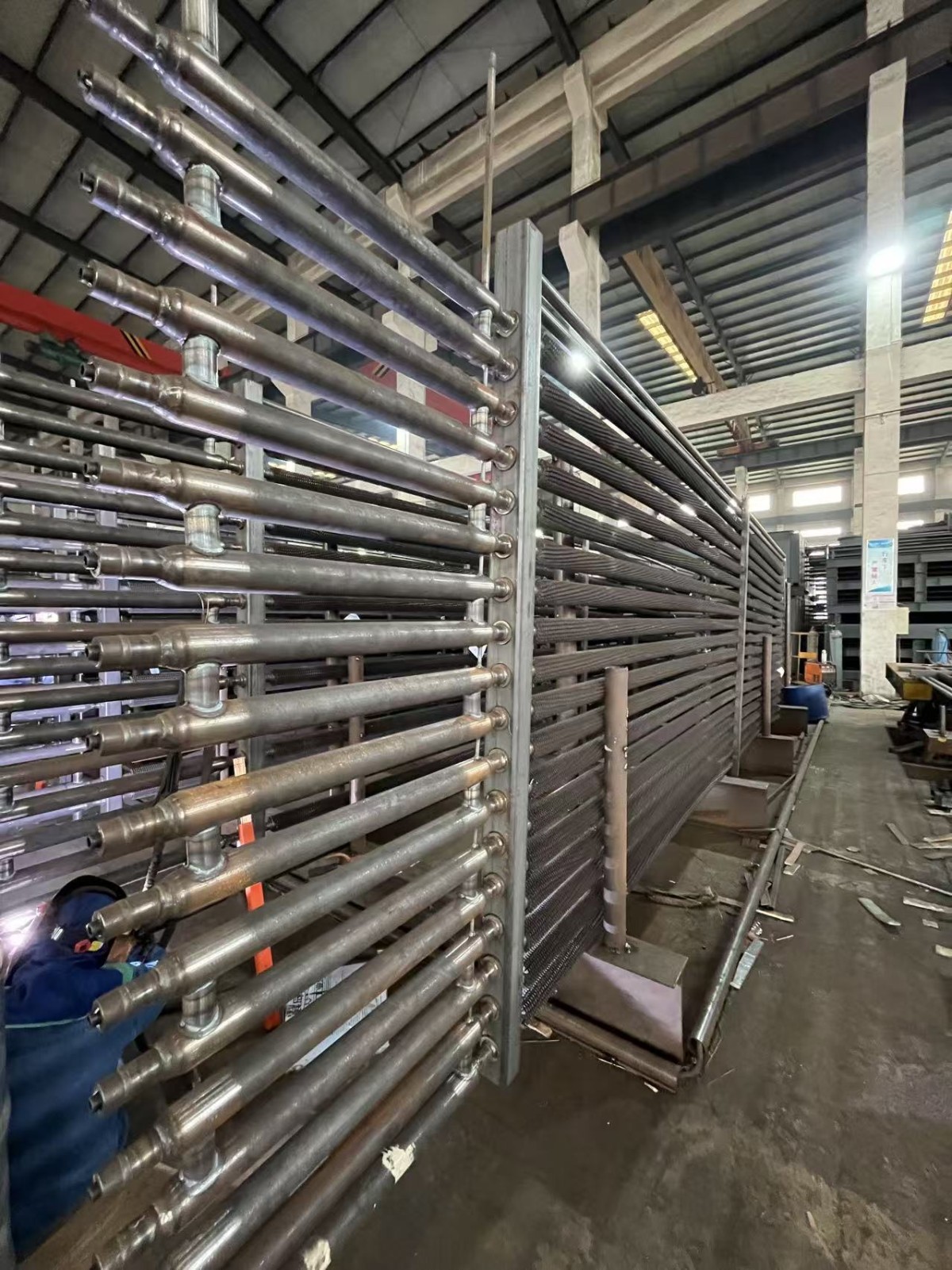
Shandong Boyu Heavy Industry Technology Group Co., Ltd., in cooperation with leading research institutes, has developed a gravity heat pipe LLTE specifically optimized for deep flue gas cooling applications in coal-fired power plants.
7. Key Technical Concepts
Heat Pipe
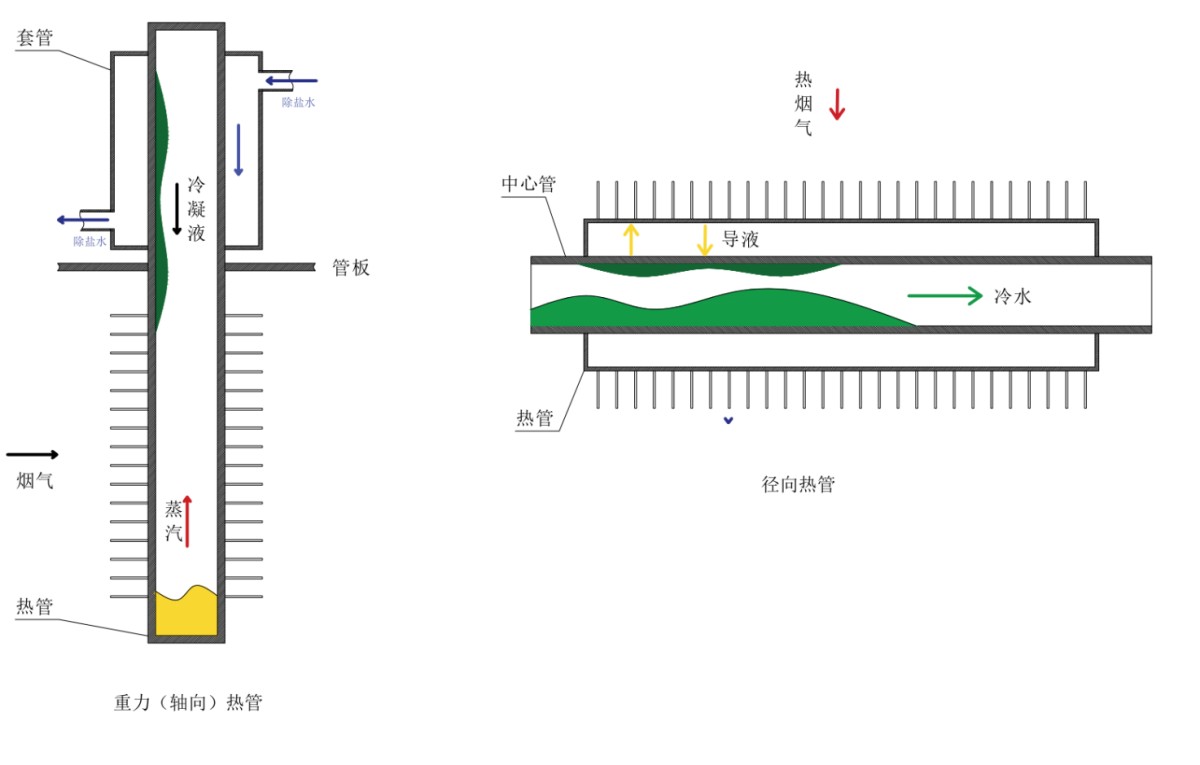
A heat pipe is a high-efficiency heat transfer device that utilizes the evaporation and condensation of a working fluid within a sealed vacuum tube, offering extremely high effective thermal conductivity.
Gravity Heat Pipe
A gravity heat pipe (thermosyphon) relies on gravity to return the condensed working fluid to the evaporator section and is widely used in waste heat recovery systems.
Dew Point and Acid Dew Point
Water dew point corrosion occurs at 40–60 °C, while acid dew point corrosion, caused by sulfuric acid condensation, typically occurs at 110–160 °C depending on fuel sulfur content.
8. Structure and Advantages of Gravity Heat Pipe LLTE
The LLTE consists of heat pipes, casing, intermediate partition plates, and feedwater headers. The partition separates flue gas and water sides, preventing fluid mixing.
- No boiler shutdown required in case of partial tube leakage
- Effective mitigation of water dew point corrosion
- Modular design for easy maintenance
High thermal efficiency and stable long-term operation
9. Application Case
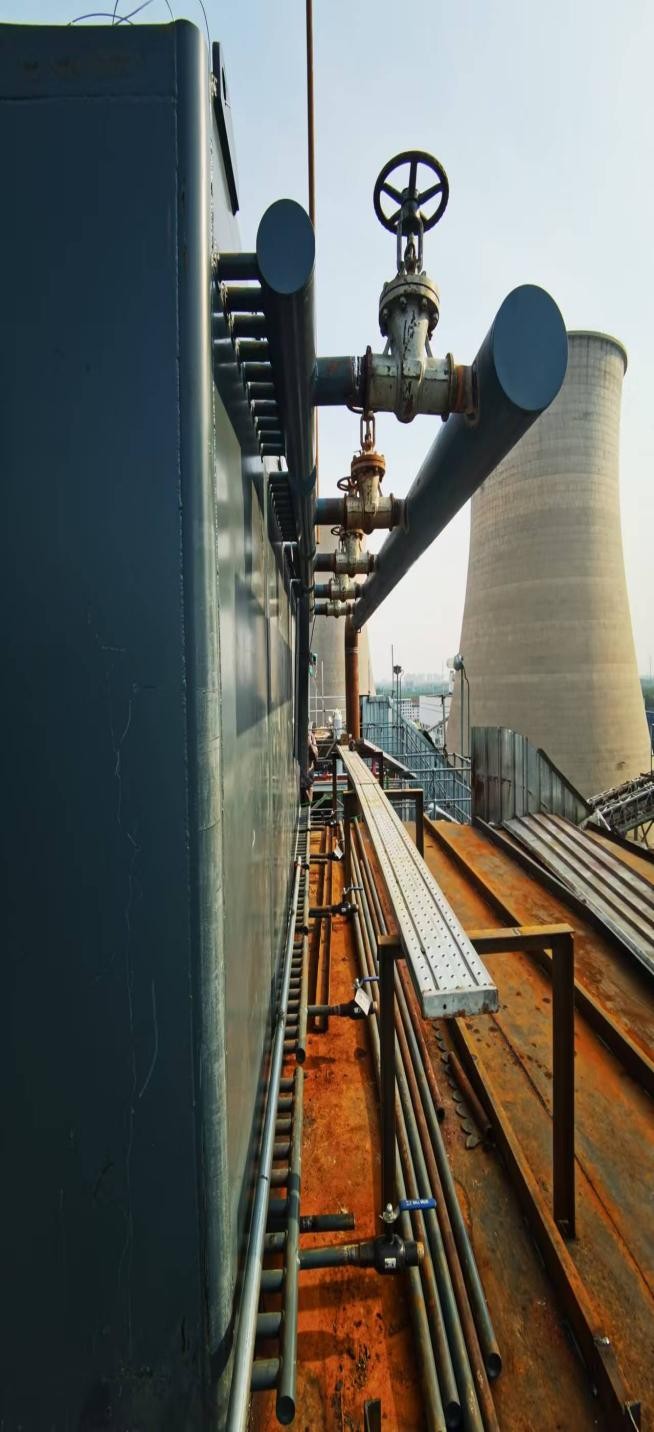
The gravity heat pipe LLTE has been successfully applied in the 660 MW Unit #2 retrofit project at Huadian Wuhu Power Plant. The system achieved the expected performance and received strong positive feedback from the owner.
10. Required Design Parameters
- Unit capacity and operating load
- Coal sulfur content
- Flue gas flow rate and number of flue ducts
- Flue gas temperature at air preheater outlet
- Target LLTE outlet flue gas temperature (typically ≥95 °C)
- Feedwater inlet and outlet temperature or flow rate
- ID fan pressure and motor power
PROFESSIONAL CONSULTATION
If you are interested in our products and want to know more details, please leave a message here, we will reply you as soon as we can.