

Our News
Find out about our latest news here.
Latest News
- ▶ Large PWHT Furnace In-House: How Boyu Heat Treats Pressure Vessels Up to 25 m Long
- ▶ Straw-Fired Biomass Boilers from a Manufacturer in China
- ▶ BOYU Adds a New High Frequency Welded Serrated Fin Tube Production Line
- ▶ Why Radiography Often Fails on Spiral Plate Heat Exchanger Shells — and How Phased Array UT Solves It
- ▶ EAC Certification for Chinese Pressure Vessels: What It Takes to Export Under TR CU 032/2013
- ▶ Spiral Plate vs Shell and Tube Heat Exchanger: Which One Fits Your Duty?
Message
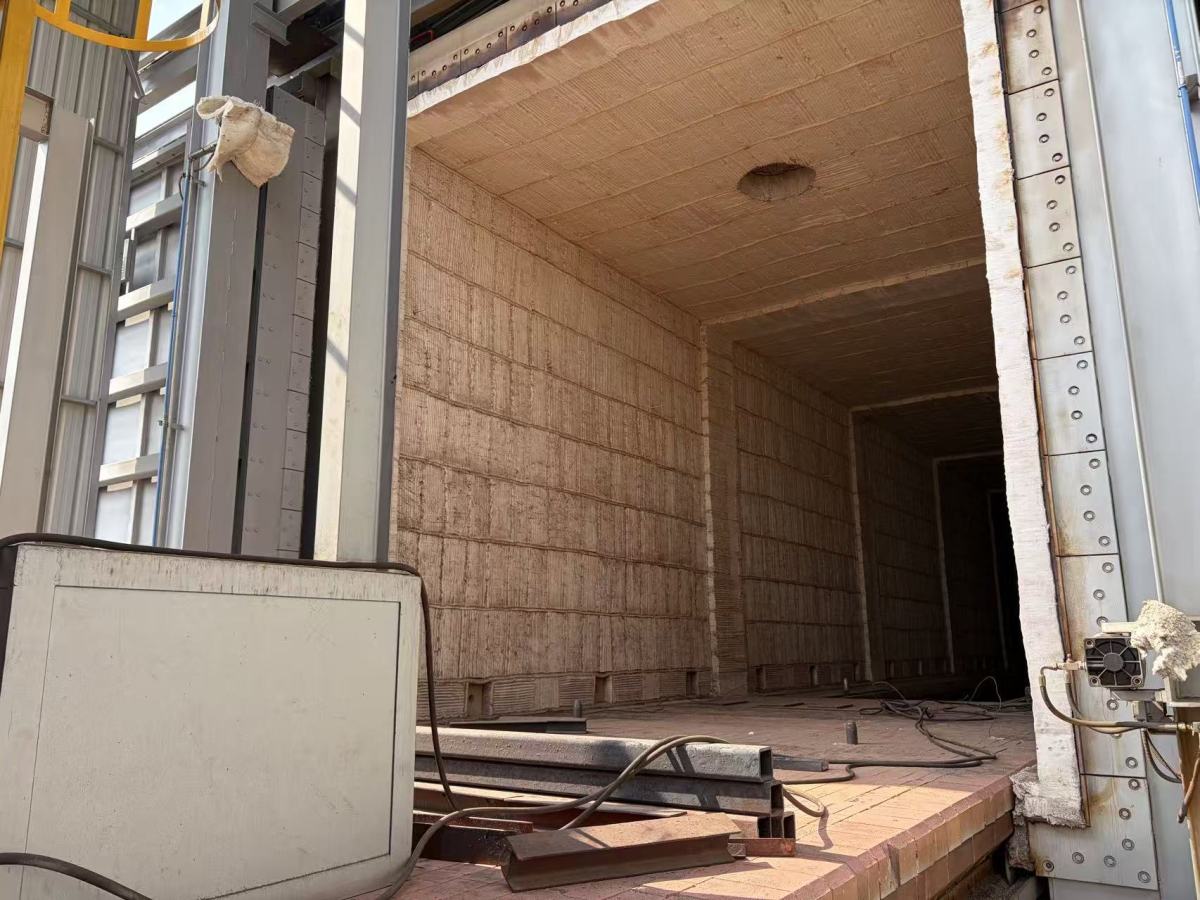
Boyu runs its own car-bottom heat treatment furnace with an effective loading space of 5 m wide × 5 m high × 25 m long. Large pressure vessels, heat exchanger shells and boiler pressure parts get post weld heat treatment (PWHT) on site, in one piece, without leaving the factory.
For buyers, that means fewer handovers, a shorter schedule and a heat treatment record that comes from the same quality system as the welding and inspection. Every cycle is recorded automatically as a temperature chart that can be printed and added to the manufacturing data book.
Furnace overview: a 25 m car-bottom furnace
The furnace is a car-bottom (bogie hearth) design. Workpieces are loaded onto a refractory-brick bogie by overhead gantry crane, then the bogie rolls into the chamber on rails. A vertical lifting door seals the opening, so long vessels go in whole rather than in sections.
The chamber walls, roof and door are lined with ceramic fibre modules. Fibre lining has low heat storage, so the furnace heats and cools faster than a brick-lined chamber and holds a more even temperature across the load.
What we heat treat
The furnace is used mainly for post weld heat treatment and stress relieving of welded pressure equipment. PWHT reduces residual welding stress, improves toughness in the weld and heat-affected zone, and lowers the risk of stress corrosion cracking in service.
Typical loads include:
- Pressure vessel shells, heads and complete vessels
- Shell-and-tube heat exchanger shells, channels and nozzle assemblies
- Waste heat boiler and HRSG components such as drums and headers
- Welded fabrications with thick sections or alloy steels that the design code requires to be heat treated
Cycles follow the code and project specification, for example ASME Section VIII Division 1 (UCS-56), ASME Section I (PW-39) or GB/T 30583 for Chinese-code equipment. Heating rate, holding temperature, holding time and cooling rate are set in a written heat treatment procedure for each job.
Temperature control and printable records
Every heat treatment cycle is logged automatically. Thermocouples attached to the workpiece feed a recorder that draws the full time–temperature curve: heating, holding and controlled cooling.
The chart can be printed and signed for each job. It goes into the manufacturing data book with the job number, so the client, the Authorized Inspector or a third-party inspector can check that the actual cycle matched the approved procedure. Records are kept on file for traceability after delivery.
Why in-house PWHT matters to buyers
- Whole-piece heat treatment. A 25 m chamber takes most vessels and exchanger shells in one charge, avoiding local PWHT of closing seams where possible.
- No outsourcing. Nothing is trucked to a third-party heat treater, so there is no transport risk, no waiting in someone else's queue and no gap in the chain of custody.
- Schedule control. Heat treatment is planned with welding and testing in one production schedule, which shortens lead time.
- One quality system. PWHT sits alongside in-house digital radiography (DR) and production under ASME "S" and "U" stamps, so welding, NDE, heat treatment and hydrotest records come from one ASME-accredited workshop.
FAQ
What is the size of Boyu's heat treatment furnace? The effective loading space is 5 m wide × 5 m high × 25 m long.
What type of furnace is it? A car-bottom (bogie hearth) furnace with a lifting door and ceramic fibre lining, loaded by gantry crane.
Can I get the PWHT temperature chart? Yes. Each cycle is recorded automatically, and the printed chart is included in the manufacturing data book.
Does Boyu outsource post weld heat treatment? No. Vessels that fit the chamber are heat treated in our own furnace in Xintai, Shandong.
Which codes can PWHT be performed to? To the code and specification of each project, for example ASME Section VIII Div. 1, ASME Section I or GB/T 30583.
PROFESSIONAL CONSULTATION
If you are interested in our products and want to know more details, please leave a message here, we will reply you as soon as we can.