

Our News
Find out about our latest news here.
Latest News
- ▶ Straw-Fired Biomass Boilers from a Manufacturer in China
- ▶ BOYU Adds a New High Frequency Welded Serrated Fin Tube Production Line
- ▶ Why Radiography Often Fails on Spiral Plate Heat Exchanger Shells — and How Phased Array UT Solves It
- ▶ EAC Certification for Chinese Pressure Vessels: What It Takes to Export Under TR CU 032/2013
- ▶ Spiral Plate vs Shell and Tube Heat Exchanger: Which One Fits Your Duty?
- ▶ CDQ Waste Heat Boilers: What Governs the Design, and What Actually Breaks
Message
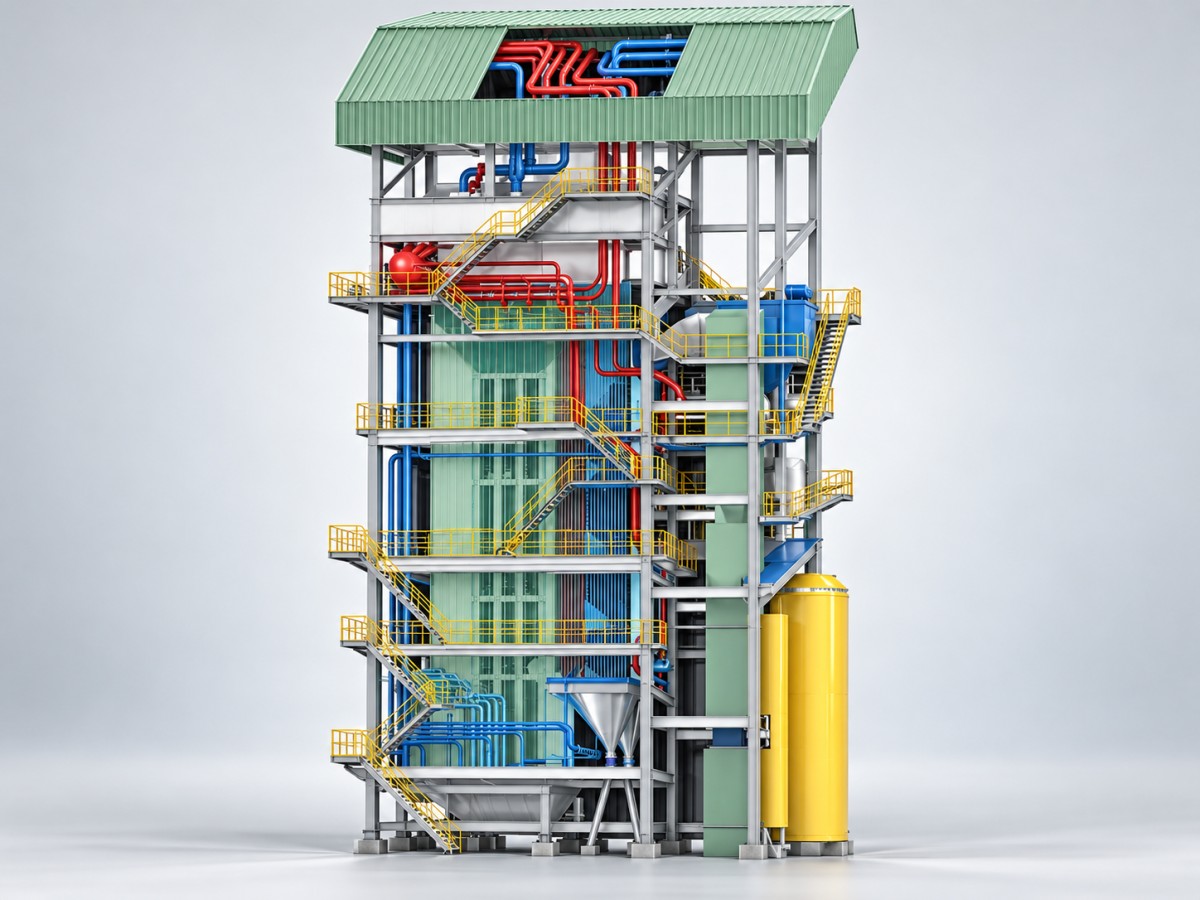
BOYU is a China-based manufacturer of boiler equipment and pressure parts for biomass energy projects. Based in Shandong, China, we provide equipment for converting straw and other agricultural residues into steam for power generation, combined heat and power (CHP), and industrial applications.
A straw-fired biomass boiler uses the energy in crop residues such as rice straw, wheat straw, cotton stalks and corn stalks. With a combustion system matched to the fuel, agricultural waste can become a useful energy resource for power plants and industrial facilities.
Agricultural Waste Boilers for Power Generation and CHP
Agricultural residues are widely available in farming regions, but their fuel properties vary considerably. Moisture, particle size, ash composition and seasonal availability all influence boiler selection and operation.
A properly specified agricultural waste boiler can support:
Biomass power generation: producing steam for a steam turbine generator.
Combined heat and power: supplying electricity and useful process heat.
Industrial steam production: serving agricultural processing and other manufacturing facilities.
Multi-fuel biomass projects: using approved combinations of crop residues and woody biomass.
Using agricultural residues as fuel can reduce dependence on fossil fuels and provide an alternative to open-field burning. Project planning should also consider sustainable residue collection, storage, transport and year-round fuel availability.
Fuel Options for Straw-Fired Biomass Boilers
A biomass boiler must be designed around its intended fuel supply. Rice straw, rice husks and woody residues should not be treated as interchangeable fuels.
Fuel analysis helps determine the appropriate furnace arrangement, feeding system, heating surfaces and ash removal equipment. Acceptable blending ratios are established for each project.
CFB Biomass Boiler Technology
A circulating fluidized bed, or CFB biomass boiler, is an option for projects requiring flexibility across several specified fuels.
The fuel burns in a circulating bed of hot solids. Cyclones separate entrained solids from the flue gas and return them to the furnace, supporting mixing and continued combustion.
For agricultural waste fuels, key engineering considerations include:
Fuel preparation and stable feeding.
Bed temperature and bed material selection.
Agglomeration and deposit formation.
Heating surface erosion and corrosion.
Ash discharge and operating control.
CFB technology can accommodate different approved biomass blends, helping plants respond to seasonal changes in fuel availability. However, changes in fuel composition must remain within the design limits of the installation.
Water-Cooled Vibrating Grate Boilers
A water-cooled vibrating grate boiler provides another combustion option for suitable straw and stalk fuels.
Periodic grate movement helps move the fuel bed and discharge ash. Water cooling protects the grate from excessive temperature, while primary and secondary air distribution supports fuel combustion and the burnout of gases above the grate.
The system must be matched to the physical form of the fuel. Feeding equipment, grate loading and air distribution are particularly important when handling bulky or uneven agricultural residues.
The choice between CFB and grate firing depends on fuel analysis, steam capacity, operating requirements and maintenance considerations.
Managing Slagging, Fouling and Superheater Corrosion
Agricultural fuels can contain potassium, chlorine and other constituents that contribute to ash deposits and high-temperature corrosion. These characteristics require particular attention when designing a rice straw boiler or wheat straw boiler.
A fuel-specific design may combine:
Furnace temperature management: considering ash behaviour and combustion requirements.
Suitable superheater positioning: managing exposure to hot gases and corrosive deposits.
Tube material selection: based on metal temperature and expected operating conditions.
Heating surface spacing: allowing for deposits and access for cleaning.
Cleaning systems: selected according to the expected fouling conditions.
Inspection access: supporting maintenance and replacement of pressure parts.
These measures help reduce operational risks. Fuel quality control, operating practice and regular inspection remain essential to long-term performance.
Reference Technical Specifications
Steam capacity describes the boiler’s steam output. Electrical generating capacity depends on steam conditions, turbine performance and the overall plant configuration.
Emission Control and Auxiliary Equipment
A biomass power plant requires coordination between the boiler and its auxiliary systems.
Combustion temperature management and air distribution can help control emissions, but additional flue gas treatment may be necessary. Dust collection and nitrogen oxide control equipment should be selected according to the fuel characteristics and applicable emission limits.
Depending on the agreed supply scope, project interfaces may include:
Fuel receiving, preparation and feeding equipment.
Combustion air fans and flue gas systems.
Feedwater equipment and piping.
Bottom ash and fly ash handling.
Dust collection and other emission control equipment.
Instrumentation and operating controls.
Defining these interfaces early helps coordinate equipment selection, plant layout and installation.
Biomass Boiler Equipment Manufactured in China
Based in Shandong, China, BOYU manufactures boiler pressure parts and heat transfer equipment for energy and industrial projects.
Our manufacturing range includes:
Waterwall panels and membrane wall assemblies.
Superheater tube bundles.
Economizers.
Evaporator tube banks.
Boiler headers and related pressure part assemblies.
For customers seeking a biomass boiler supplier in China, enquiries can cover boiler equipment, heating surface modules and replacement pressure parts. Custom manufacturing is based on agreed technical specifications, drawings, material requirements and inspection arrangements.
The equipment scope and design responsibilities are confirmed for each project, allowing customers to coordinate BOYU’s supply with their plant engineering and procurement requirements.
Frequently Asked Questions
What is a straw-fired biomass boiler?
A straw-fired biomass boiler burns agricultural straw to produce steam. The steam can be used for power generation, combined heat and power, or industrial processes. Its combustion and heat transfer systems must account for the fuel’s physical properties and ash chemistry.
What is the difference between rice straw and rice husk boilers?
Rice straw consists of the stalk material remaining after harvesting. Rice husks are separated from the grain during milling. Their bulk density, feeding behaviour and ash characteristics differ, so boiler suitability must be assessed separately.
Can one boiler burn different agricultural residues?
Yes. A biomass boiler can be designed for several specified fuels or approved blends. Moisture, heating value, chlorine, alkali content and ash behaviour must be evaluated before changing the fuel mixture.
Which is better for straw: CFB or vibrating grate combustion?
Both technologies can be considered for suitable projects. CFB provides mixing and flexibility across approved fuels, while vibrating grate systems offer an established combustion arrangement for suitable straw and stalk materials. Selection depends on the fuel supply and plant requirements.
How is superheater corrosion controlled?
Corrosion management combines suitable steam conditions, tube metal temperature control, material selection, superheater arrangement and deposit management. The appropriate measures depend on fuel analysis and the expected operating environment.
Where is BOYU biomass boiler equipment manufactured?
BOYU manufactures boiler equipment and pressure parts in Shandong, China. Material requirements, inspection arrangements and delivery documentation are defined according to the agreed project specification.
Can BOYU manufacture replacement biomass boiler pressure parts?
BOYU accepts enquiries for replacement heating surfaces and pressure part assemblies. Drawings, material specifications, operating parameters and information about the existing equipment help define the required manufacturing scope.
What information is needed for a quotation?
Please provide:
Required steam capacity, pressure and temperature.
Fuel types, analysis and expected blending ratios.
Feedwater temperature and available water quality information.
Project location and emission requirements.
Required equipment scope and design standard.
Drawings and material specifications for replacement components.
Request a Biomass Boiler Quotation
Looking for a straw-fired biomass boiler manufacturer in China or a supplier of custom boiler pressure parts?
Contact BOYU with your fuel information, steam requirements and project specifications. We will review the requirements and propose an equipment scope for your agricultural waste power generation, CHP or industrial steam project.
PROFESSIONAL CONSULTATION
If you are interested in our products and want to know more details, please leave a message here, we will reply you as soon as we can.