

Our News
Find out about our latest news here.
Latest News
- ▶ Spiral Plate vs Shell and Tube Heat Exchanger: Which One Fits Your Duty?
- ▶ CDQ Waste Heat Boilers: What Governs the Design, and What Actually Breaks
- ▶ What Are the Heating Surfaces in a Waste Heat Boiler? Superheater, Evaporator and Economizer Explained
- ▶ Buying Pressure Vessels from China: How to Read a Q345R and an SA-516 Gr.70 Mill Certificate
- ▶ Boyu Heavy Industry Adds Power Engineering Construction License to Its ASME-Certified Manufacturing Base
- ▶ Inside the Shop: What Those Chalk Marks on a Vessel Mean
Message
1. Why Do Superheater Tubes Suffer from Wear?
In industrial boilers, serpentine tube superheaters operate under extreme conditions, including high temperatures, high-velocity flue gas, and particle-laden environments. These factors make boiler tubes highly susceptible to wear and damage.
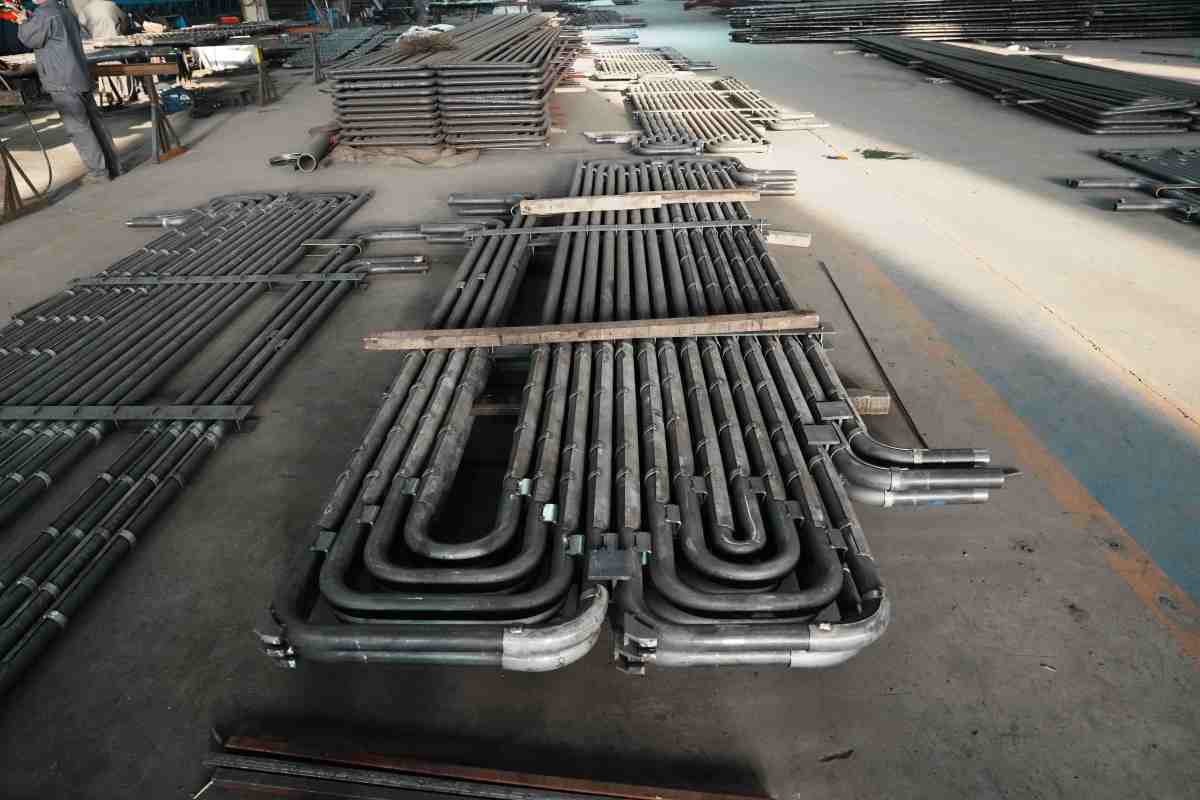
The most common wear mechanisms include:
- Erosion from ash particles: High-speed flue gas carrying ash continuously impacts tube surfaces, leading to material loss.
- Fretting wear due to vibration: Tube bundles may vibrate under thermal expansion and gas flow, causing contact wear between tubes.
- Support point abrasion: Contact between tubes and support structures leads to localized thinning.
If not properly addressed, these issues can result in reduced wall thickness, increased risk of tube failure, shortened equipment service life, and higher maintenance costs.
Therefore, implementing an effective anti-wear solution for boiler superheater tubes is critical.
2. What Are External Anti-Wear Pads?
External anti-wear pads are protective elements welded onto the outer surface of boiler tubes, especially in high-erosion zones of superheater and economizer tube bundles.
Key characteristics include:
- Segmented design: Installed in intervals along the tube length
- Welded attachment: Fixed by spot welding or short weld seams
- Localized protection: Focused on high-risk erosion areas
Working principles:
- Primary impact resistance: Anti-wear pads act as the first barrier, absorbing the impact of ash particles and preventing direct erosion of the tube surface.
- Reduced wear rate: By increasing local thickness and modifying flow interaction, they significantly slow down material loss.
- Extended tube lifespan: Even if the pads wear out, the pressure-bearing tube remains protected, delaying failure.
3. Advantages of Anti-Wear Pads in Serpentine Tube Superheaters
Cost-effective protection
Compared to full overlay welding or high-alloy material upgrades, external anti-wear pads offer lower manufacturing cost, easier fabrication, and suitability for large-scale production.
Adaptability to harsh conditions
They are widely used in high ash content flue gas environments, high-velocity gas flow regions, and localized erosion-prone zones.
Easy maintenance and replacement
Pads can be replaced without removing the entire tube bundle, reducing downtime and lifecycle cost.
Flexible design optimization
Anti-wear pads can be customized based on flue gas flow direction, erosion intensity distribution, and tube arrangement.
4. Key Design and Manufacturing Considerations
Material compatibility
Pad material should be compatible with tube material such as SA-213 T11 or T22. Excessive hardness mismatch should be avoided to prevent secondary wear.
Welding quality control
Welding must follow qualified procedures (WPS). Heat input should be controlled to protect tube properties. Non-destructive testing such as visual testing (VT) or magnetic particle testing (MT) is recommended.
Optimized layout
Design should focus on erosion-facing areas rather than uniform spacing. High-risk zones should have increased pad density.
Structural design
Pad thickness and size must be properly selected to avoid stress concentration and ensure minimal disruption to gas flow.
5. Application Value of External Anti-Wear Pads
External anti-wear pads are widely recognized as an efficient and practical solution in boiler superheater protection systems.
Their benefits include:
- Reducing tube erosion rate
- Extending superheater service life
- Lowering maintenance and replacement costs
- Improving overall system reliability
6. Conclusion
As boiler operating conditions become increasingly demanding, protecting serpentine tube superheaters from erosion is more important than ever.
External anti-wear pads provide a reliable, economical, and flexible solution for enhancing durability and performance. With proper design, material selection, and manufacturing control, they can significantly improve the long-term operation of industrial boiler systems.
PROFESSIONAL CONSULTATION
If you are interested in our products and want to know more details, please leave a message here, we will reply you as soon as we can.