

BOYU Refinery Project Delivery
15 ASME-Designed Floating Head Refinery Heat Exchangers Shipped for an Iraq Refinery Project
A Five-Train Refinery Heat Exchanger Delivery
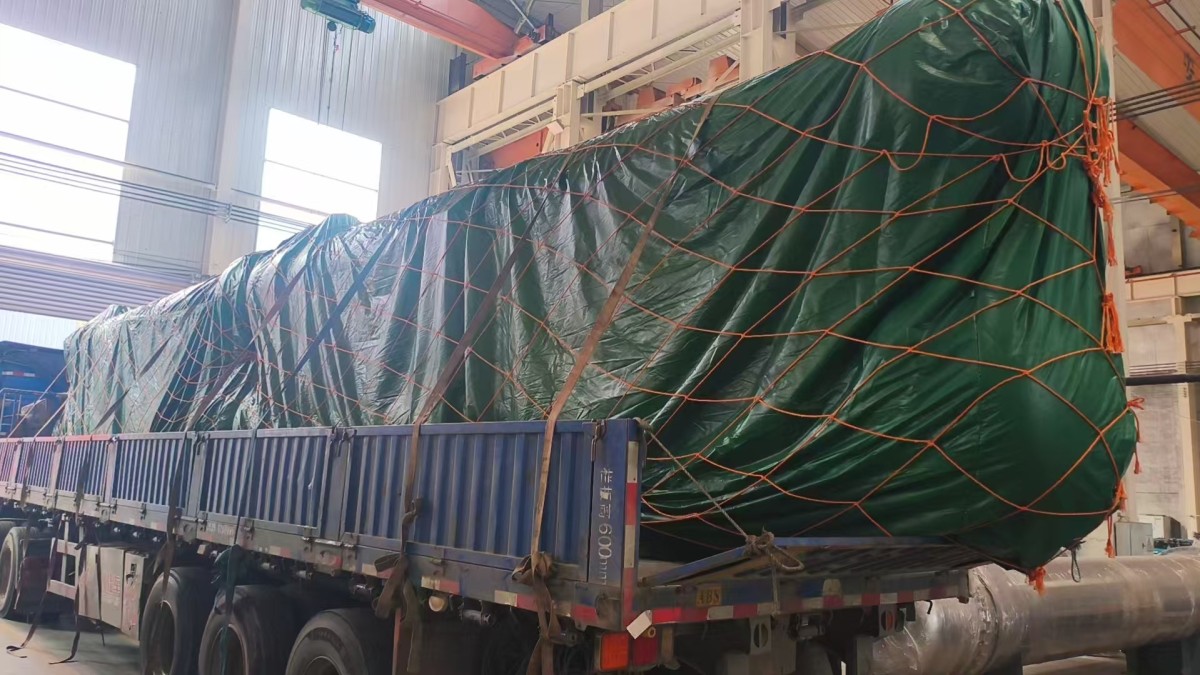
BOYU Industry has completed the manufacturing and shipment of 15 floating head shell-and-tube heat exchangers for an oil refinery project in Iraq.
The equipment is arranged as five complete exchanger trains. Each train consists of three connected refinery heat exchangers identified as E-211A, E-211B and E-211C. The shell-side process medium is identified as RCR, while the tube-side medium is crude charge.
Each exchanger provides approximately 178.1 m² of nominal heat transfer area. One three-unit train therefore provides approximately 534.3 m², with a combined listed net weight of about 24.7 tonnes.
Why Floating Head Heat Exchangers Are Used in Refineries
Refinery heat exchanger selection is influenced not only by heat duty, but also by thermal expansion, fouling, inspection access and shutdown maintenance.
The TEMA AES configuration used for this project combines an A-type channel, an E-type shell and an S-type floating head with a backing device. The floating end allows the tube bundle to expand independently from the shell, reducing differential thermal stress during elevated-temperature operation.
The project specifies a tube-side design temperature of 343.3°C and a shell-side design temperature of 237.7°C. The floating head arrangement accommodates the resulting thermal movement without relying on a shell expansion joint.
Thermal Flexibility
The floating end allows relative movement between the tube bundle and shell during heating, cooling and repeated operating cycles.
Removable Tube Bundle
The bundle can be withdrawn for shell-side cleaning, tube inspection, repair, plugging or replacement during a refinery shutdown.
Access for Fouling Service
Crude and heavy process streams may form deposits. Mechanical access supports cleaning and recovery of heat transfer performance.
Long-Term Maintainability
Internal parts can be examined more thoroughly than in a permanently fixed bundle construction.
Main Technical Specifications
The following data is based on the approved as-built assembly drawings for the E-211A, E-211B and E-211C refinery heat exchanger train.
ASME Materials for Pressure-Retaining Components
Material selection must account for design pressure, elevated temperature, welding requirements, corrosion allowance and long-term mechanical reliability.
The principal materials specified for this project include:
- Shell plates and major pressure plates: ASME SA-516 Gr.70N
- Heat exchanger tubes: ASME SA-214
- Forged components: ASME SA-105N
- Nozzle pipes: ASME SA-106 Gr.B
- Pipe fittings: ASME SA-234 WPB
- Bolting: ASME SA-193 B7 / SA-194 2H
The drawings also specify normalized or controlled heat-treatment conditions for relevant carbon steel pressure parts. These requirements support consistent mechanical properties and fabrication quality for refinery service.
Manufacturing the Floating Head Refinery Heat Exchangers
A floating head exchanger contains removable pressure components and internal assemblies that require accurate control of sealing surfaces, tube bundle geometry and final alignment.
- Material control: incoming pressure-part materials are verified against project specifications and traceability documentation.
- Shell and channel fabrication: shell courses, channels, heads, nozzles and supports are formed, fitted and welded under approved procedures.
- Tubesheet preparation: tube holes and gasket surfaces are machined to the required arrangement and dimensional tolerances.
- Tube bundle assembly: 370 tubes, baffles, tie rods, tubesheets and floating head components are assembled and aligned.
- Tube-to-tubesheet joining: the specified lightly expanded and strength-welded joint is completed and examined.
- Final integration: the bundle, channel, floating head and shell are assembled before inspection, testing and preservation.
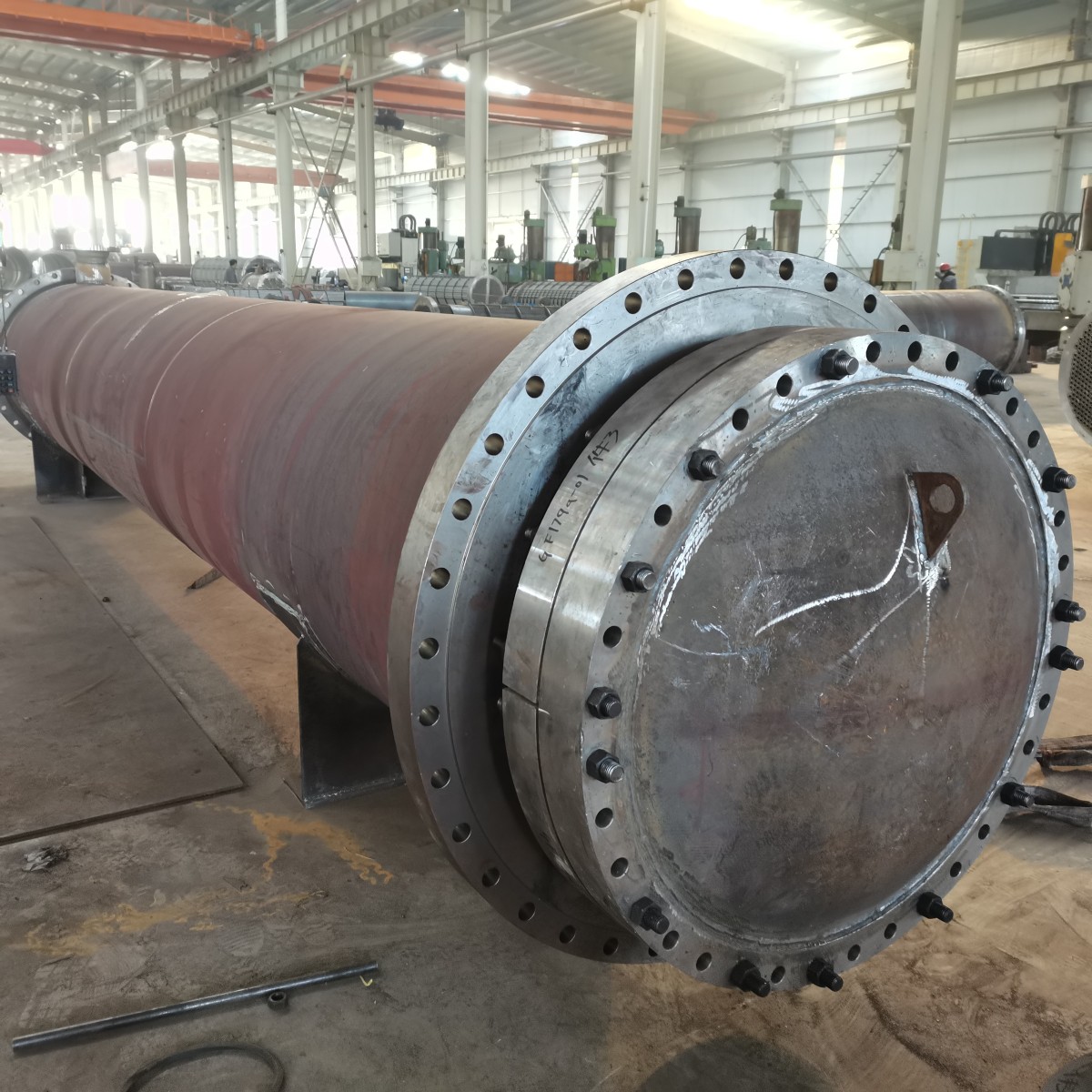
Quality control for a refinery heat exchanger covers raw materials, welding, dimensions, pressure integrity, internal cleanliness and final documentation.
Pressure-retaining welds and tube-to-tubesheet joints are examined in accordance with the approved drawings and manufacturing procedures. The project drawings also specify post-weld heat treatment for the floating head cover and the left channel.
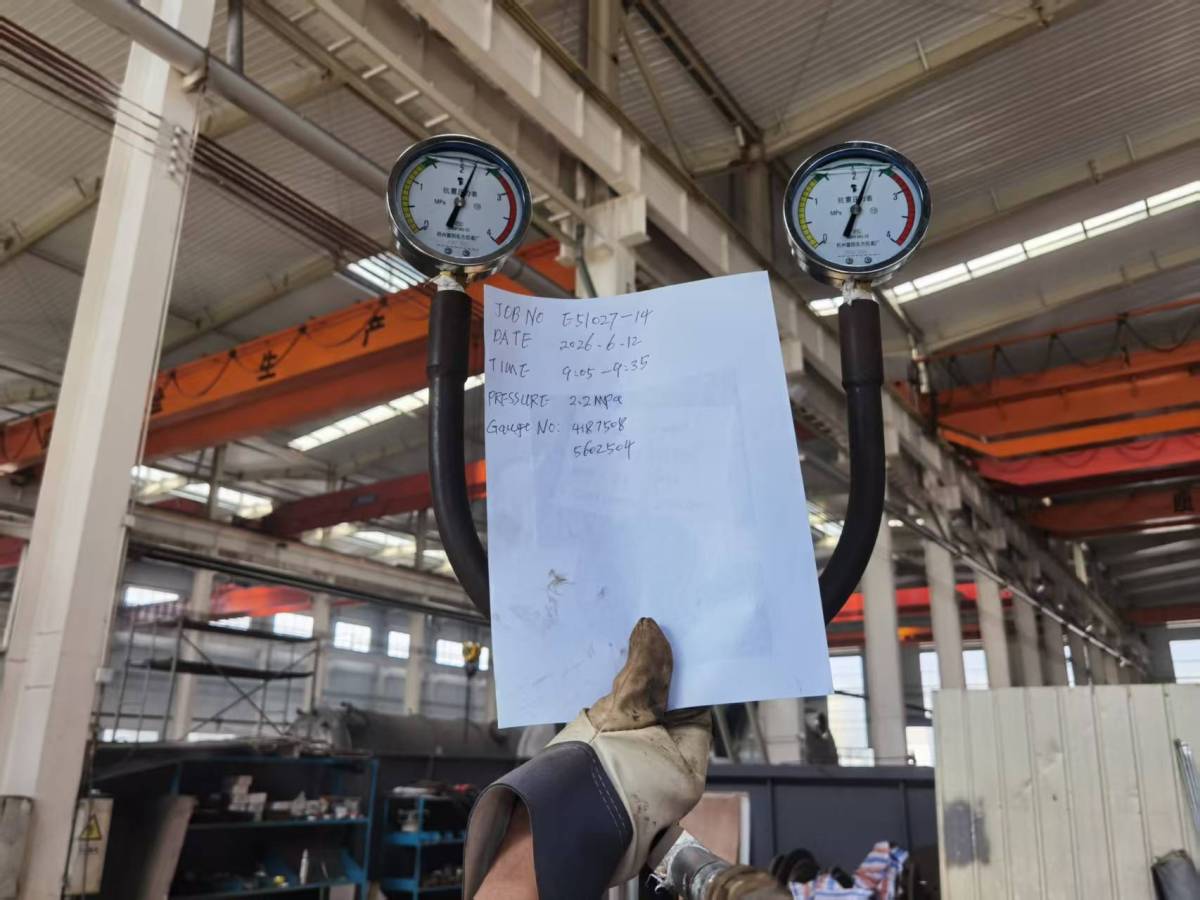
The shell side and tube side are hydrostatically tested separately at 22 kg/cm²(g) and 17.3 kg/cm²(g), respectively. The chloride-ion content of hydrostatic test water is limited to no more than 25 mg/L. After testing, internal surfaces are drained and dried by air blowing or another controlled method.
Manufacturing Records
- Material traceability
- Welding procedure control
- Nondestructive examination
- Heat-treatment records
Final Verification
- Dimensional inspection
- Shell-side hydrostatic test
- Tube-side hydrostatic test
- Cleaning, drying and preservation
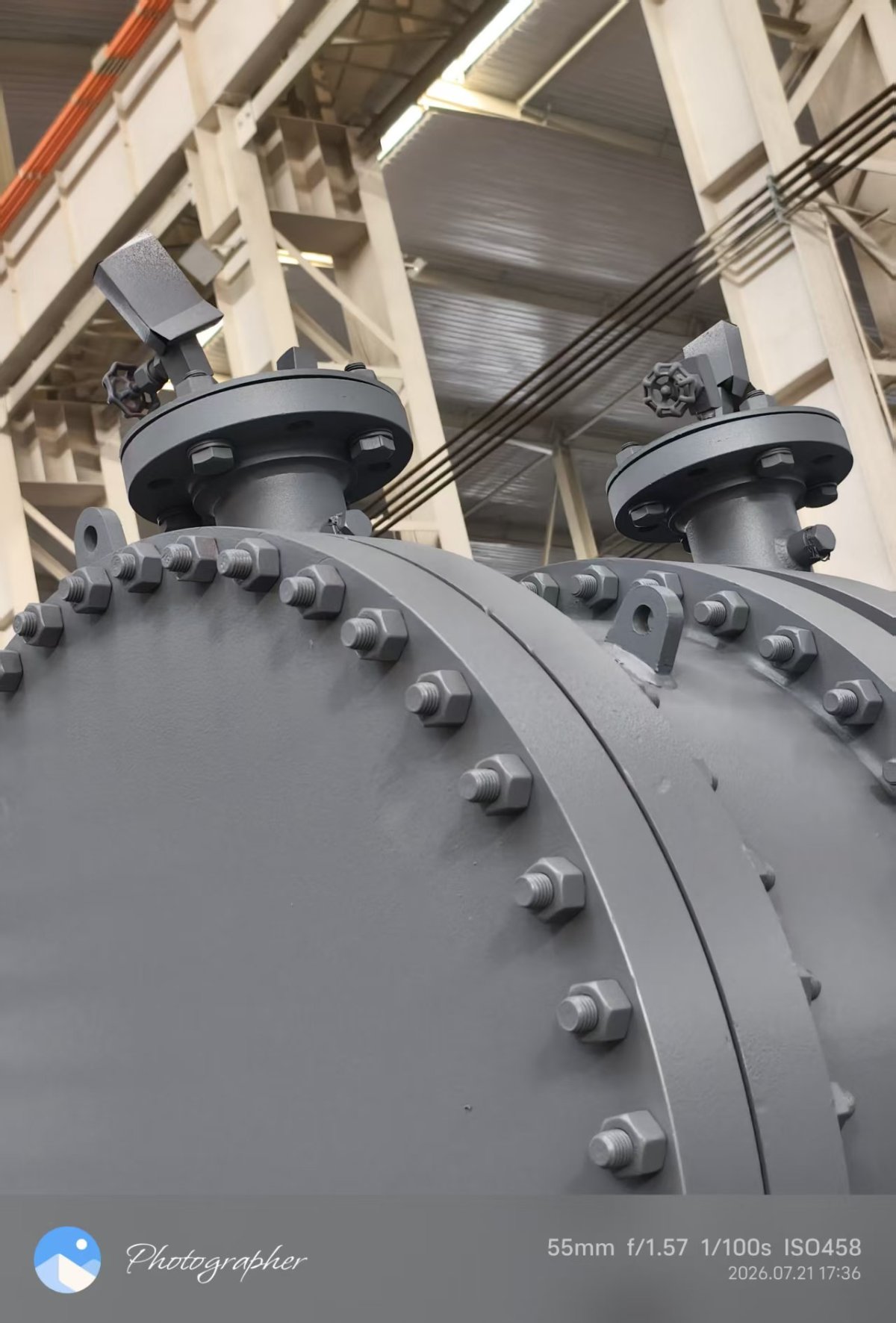
Preparing 15 Refinery Heat Exchangers for Shipment to Iraq
A multi-unit international delivery requires coordinated manufacturing schedules, interface consistency, preservation and complete project documentation.
Before shipment, flange faces, nozzles, removable covers and exposed machined surfaces are protected. Internal spaces are cleaned and dried, while equipment identification, shipping marks and lifting locations are checked for overseas handling and site installation.
The shipment of five complete exchanger trains demonstrates BOYU's ability to manufacture refinery heat exchanger equipment in batches while maintaining consistency across multiple connected units.
Custom Refinery Heat Exchangers from BOYU Industry
BOYU Industry manufactures customized shell-and-tube heat exchangers for refining, petrochemical, chemical processing, power generation and other heavy industrial applications.
Available Configurations
- Floating head heat exchangers
- Fixed tubesheet heat exchangers
- U-tube heat exchangers
- TEMA shell-and-tube configurations
- Removable tube bundles
Project Capabilities
- ASME-based mechanical design
- High-temperature refinery service
- Carbon steel and alloy construction
- Multi-unit exchanger trains
- International project documentation
Each refinery heat exchanger can be customized according to the process medium, heat duty, operating and design conditions, applicable code, construction materials, corrosion allowance, fouling tendency and maintenance strategy.
Frequently Asked Questions
Why are floating head heat exchangers used in refineries?
They accommodate differential thermal expansion and allow the tube bundle to be removed for inspection and mechanical cleaning. These features are valuable for elevated-temperature and fouling refinery services.
What does TEMA AES mean?
TEMA AES refers to an A-type channel, an E-type shell and an S-type floating head construction with a backing device.
Does “ASME-designed” mean that the equipment is ASME U-stamped?
Not necessarily. “ASME-designed” indicates that the project design basis follows the applicable ASME code requirements. A U stamp should only be stated when the specific equipment has been manufactured, inspected and certified under the applicable authorized certification scope.
What information is needed for a refinery heat exchanger quotation?
A process datasheet, thermal calculation or equipment drawing is preferred. Important inputs include media, flow rates, inlet and outlet temperatures, pressures, materials, fouling factors, corrosion allowance and the required design code.
Planning a Refinery Heat Exchanger Project?
Send BOYU your process datasheet, thermal calculation or equipment drawings. Our engineering team will review the operating conditions, materials, configuration and inspection requirements for a customized proposal.
Send Your Project Requirements